Raising a German Shepherd puppy is a thrilling challenge, but it’s no secret that these “land sharks” grow at a breakneck pace. One week they’re a fluffball; the next, they’re a high-energy powerhouse testing the limits of every leash.
If you’re worried about protecting your pup’s skeletal development while managing that intense working breed drive, you’re in the right place. Choosing the wrong gear can lead to tracheal damage or poor joint health, but the right puppy harness gives you total control without compromising safety.
In this guide, I’ll show you exactly how to select a heavy-duty harness that adapts to your GSD’s growth spurts and stops leash pulling before it becomes a lifelong habit.
Let’s dive in.
Why Your German Shepherd Puppy Needs a Specialized Harness Fit
I’ve seen firsthand how the right gear transforms the early stages of raising a German Shepherd. Because this breed possesses unique physiological and behavioral traits, a standard “off-the-shelf” solution rarely suffices. Selecting a puppy harness german shepherd owners can trust is the first step in ensuring long-term health and successful training.
Accommodating Rapid Growth and Skeletal Health
German Shepherd Dogs (GSDs) are a large breed known for their intense growth spurts. During the first year, their bones and joints are highly vulnerable to external stressors.
- Canine Skeletal Development: A poorly fitted harness can restrict the natural movement of the shoulder blades, potentially leading to gait abnormalities.
- Pressure Distribution: I advocate for designs that distribute weight evenly across the strongest parts of the dog’s frame, avoiding the delicate growth plates.
- Long-term Wellness: Proper support now prevents the development of orthopedic issues that are common in deep-chested working breeds.
Prioritizing Tracheal Protection and Safety
GSD puppies are bundles of energy and often lack impulse control. When a puppy bolts or pulls against a traditional flat collar, the force is concentrated entirely on the neck.
- Preventing Injury: Excessive leash pressure on the throat can lead to tracheal protection issues or soft tissue damage.
- Security: A secure harness ensures that even during a “zoomie” or a sudden distraction, your pup remains safely attached to the leash without the risk of slipping out.
Managing High-Drive Working Dog Energy
Even at a few months old, German Shepherds exhibit the high drive of a working breed. They are strong, fast, and highly motivated by their environment.
- Directional Control: A harness provides much better leverage than a collar, allowing you to guide your puppy’s center of gravity.
- Training Foundation: Using a no-pull front clip during GSD puppy training helps manage their power early on. It redirects the puppy back toward you when they attempt to pull, teaching them to walk politely without the need for harsh corrections.
- Built-in Durability: Because GSDs are powerful, I look for heavy-duty nylon and reinforced stitching to handle their strength as they mature.
Choosing a harness vs collar for your GSD puppy
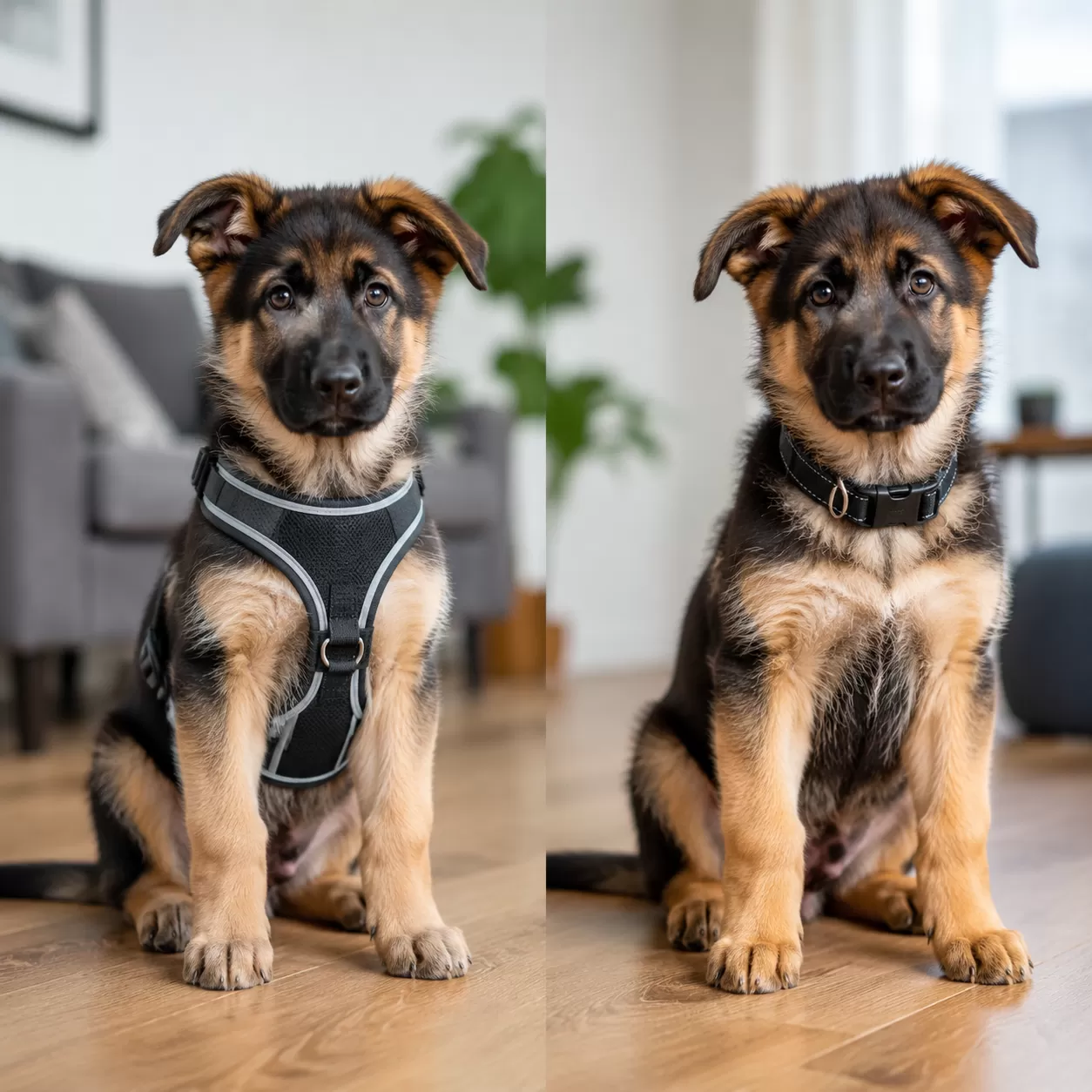
In my experience, the debate shouldn’t be about choosing one over the other, but rather understanding the specific purpose of each. For a puppy harness German Shepherd owners often find that a combination approach works best for safety and development.
Flat collars for identification
Every GSD puppy needs a standard flat collar. Its primary job is to hold ID tags, medical info, and licenses. While essential for identification, I don’t recommend attaching a leash to a collar for training or long walks. The neck of a German Shepherd is sensitive, and constant leash pressure can lead to unintended thyroid or tracheal issues.
Daily walking harnesses for control
A dedicated puppy harness for a German Shepherd is my top choice for daily exercise. It shifts the point of contact from the throat to the strongest part of the dog—the chest.
- Safety: Reduces the risk of the puppy slipping out during a “spook” moment.
- Control: Offers better leverage to guide a high-energy dog.
- Health: Prevents repetitive strain on the neck during GSD puppy training.
Understanding prong collars vs harnesses
New owners often ask what is a prong collar for dogs? A prong collar is a metal training tool designed to apply pressure around the neck to stop pulling. While some professional trainers use them for adult dogs, they are generally too harsh for the soft tissue and developing bones of a puppy. A harness with a no-pull front clip is a much more humane and effective way to manage a growing dog’s strength.
My ergonomic support philosophy
I believe in breed-specific ergonomics. Because German Shepherds are prone to joint and skeletal issues, the gear they wear must not restrict their natural gait. My philosophy is simple: use a collar for ID and a https://www.minhttps://www.minardipets.com/how-to-choose-dog-collar-harness-leash-set-sizing-safety-2026.html”>properly sized harness and leash set for movement.
| Gear Type | Best Use Case | Risk Level |
|---|---|---|
| Flat Collar | ID tags and fashion | High (for pulling) |
| No-Pull Harness | Training and walks | Low (ergonomic) |
| Prong Collar | Advanced correction | Very High (for puppies) |
Prioritizing comfort early on helps your pup build a positive association with gear. You can find more details on professional-grade harness sets that balance durability with the specific needs of a working breed.
Essential Features for a German Shepherd Puppy Harness
When I’m selecting gear for a GSD, I look for specific build qualities that handle their strength while respecting their rapid development. A puppy harness german shepherd owners can trust must balance ruggedness with ergonomic comfort.
Adjustable Straps for Growing Frames
German Shepherds grow at an incredible rate, often looking different from one week to the next. I always look for an adjustable puppy harness with at least four or five adjustment points. This ensures the fit remains snug and safe as your pup transitions through growth spurts without causing restricted movement or rubbing.
Heavy-Duty Hardware and Durability
This is a powerful working breed, even at six months old. I prioritize heavy-duty nylon webbing and reinforced working breed hardware, such as metal D-rings and high-impact buckles. Flimsy materials won’t hold up against a GSD’s drive. For a deeper dive into choosing the right specifications for your dog, you can refer to my https://www.minhttps://www.minardipets.com/dog-harness-guide.html”>dog harness guide.
No-Pull Front Clips and Safety Handles
Training a high-drive puppy requires the right leverage. I focus on these key safety and control features:
- No-pull front clip: This attachment point redirects the puppy’s momentum toward you when they tension the lead, effectively discouraging pulling.
- Built-in traffic handle: A sturdy handle on the back is essential for immediate control in crowded areas or during vet visits.
- Reflective safety stitching: High-visibility thread is a must for safety during low-light walks.
- Padded chest plate: This distributes pressure across the chest rather than the throat, supporting healthy canine skeletal development.
Using a specialized https://www.minardipets.com/product/dog-harness-with-airtag-holder-for-safe-daily-walking.https://www.minardipets.com/product/dog-harness-with-airtag-holder-for-safe-daily-walking.html”>dog harness with an AirTag holder provides extra peace of mind for daily walking, ensuring you can always locate your puppy if they happen to slip their lead.
Best Puppy Harness German Shepherd Styles
Selecting the right style for your growing GSD ensures they stay secure and comfortable during their high-energy development phase. I focus on these three main designs to balance control and comfort:
Tactical vests for durability
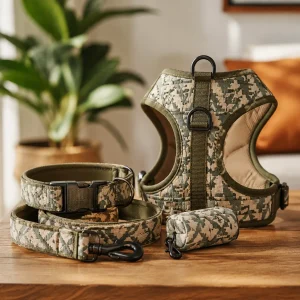
For owners who want rugged tactical dog gear, these vests are the top choice. Constructed from heavy-duty nylon, they offer an escape-proof design that handles the strength and drive of a working breed. These vests are built to last through rough play and the early stages of GSD puppy training.
Padded no-pull options
To manage lunging without causing discomfort, a reflective K9 dog harness with oxford fabric is a reliable daily driver. The padded chest plate protects the ribcage and spreads pressure evenly, while the no-pull front clip helps redirect your puppy’s focus back to you when they try to charge ahead.
Step-in vs over-the-head styles
The entry style of a puppy harness German Shepherd models often depends on your dog’s specific temperament:
- Over-the-head: These typically provide better stability and more adjustment points, which is ideal for a rapidly growing frame.
- Step-in: This style is best for puppies who are sensitive about their ears or head. If you go this route, ensure it uses high-quality working breed hardware to prevent the buckles from snapping under tension.
- All-day comfort: For a softer fit during long training sessions, a neoprene dog harness and leash set offers excellent cushioning against the skin to prevent chafing as your pup moves.
How to measure your German Shepherd puppy
Getting the right fit for a puppy harness German Shepherd owners can rely on requires more than just guessing the size based on age. Because this breed has a unique, deep-chested physique, I prioritize breed-specific ergonomics to ensure the gear supports their fast-growing frames without restricting movement.
Measuring chest girth accurately
The most important metric for any GSD harness is the chest girth measurement. To get this right:
- Use a flexible measuring tape.
- Wrap it around the widest part of your puppy’s ribcage, typically two inches behind the front legs.
- Keep the tape snug but not tight to get a true reading of their current size.
Neck size for a proper fit
While the chest does the heavy lifting, the neck opening must be wide enough to sit at the base of the neck, not high up on the throat. This positioning is vital for tracheal protection, ensuring that even if the pup lungs, the pressure is distributed across the shoulders rather than the windpipe. Just as you would when learning how to choose dog coat size, always measure the widest part of the lower neck for a secure, non-restrictive fit.
The two-finger comfort rule
Once you have the harness on your GSD, I always use the two-finger rule to verify the tension. You should be able to fit two fingers comfortably between the heavy-duty nylon straps and your puppy’s skin.
- Too loose: The puppy might slip out, defeating the escape-proof design.
- Too tight: It can lead to chafing and hinder healthy canine skeletal development.
Tracking your pup’s growth
German Shepherds grow at an incredible rate. I recommend re-checking these measurements every single week. An adjustable puppy harness is essential during the first six months, as it allows you to expand the straps to match their rapid “filling out” phase without needing to buy new gear every two weeks. Always keep a log of their girth to ensure the padded chest plate is still centered and providing maximum comfort.
Training your puppy harness german shepherd for success
Positive scent and treat association
Building a positive bond with gear starts before you even buckle a strap. I recommend letting your pup sniff the gear while offering high-value treats. The goal is for them to get excited when they see their tactical dog harnesses coming out of the closet, associating the equipment with rewards and adventure.
Keeping early sessions short
Patience is vital during GSD puppy training. Avoid overwhelming your dog by keeping the first few experiences low-pressure:
- In-home practice: Slip the harness on for just 5–10 minutes while they eat or play.
- Keep it light: Don’t attach a leash immediately; let them get used to the weight and feel of the straps.
- Gradual duration: Slowly increase the time they wear the harness until they are completely relaxed and moving naturally.
Using the front clip correctly
Once your pup is comfortable, utilizing the no-pull front clip is essential for managing a high-drive breed. This attachment point provides better leverage, gently redirecting the pup’s momentum back toward you if they start to lunge. To ensure the hardware sits correctly on their chest without sliding, a customized dog harness offers the most secure fit, preventing the gear from shifting and causing skin irritation during active training sessions.
Maintaining your GSD puppy gear
German Shepherds are active, high-drive dogs that thrive in the outdoors, which means their gear takes a beating. Keeping your puppy harness german shepherd clean and functional isn’t just about aesthetics; it’s about ensuring the heavy-duty nylon and safety features remain reliable during training.
Cleaning mud and shedding hair
The “German Shedder” reputation is real, and those fine hairs often get woven into the harness mesh. Regular cleaning prevents odors and skin irritation for your pup.
- Hair Removal: Use a stiff brush or a lint roller to remove loose fur from the lining before it gets wet.
- Hand Washing: I recommend soaking the harness in warm water with a mild detergent. Avoid harsh chemicals that could degrade the working breed hardware.
- Drying: Always air-dry your gear. High heat from a dryer can damage the reflective safety stitching and cause the straps to lose their elasticity.
Since GSD puppies often try to chew on anything within reach—including their straps—make sure you’re redirecting that energy. Providing the best chew toys for teething puppies will help keep them occupied while their harness is off for a cleaning.
Safety inspection checklist
Because of the power these dogs develop early on, a weekly equipment check is mandatory. I always look for these red flags to prevent gear failure:
- Webbing Integrity: Look for fraying or “fuzziness” on the straps, which indicates the material is weakening.
- Buckle Function: Ensure the plastic or metal buckles click securely and are free of dirt or sand that could cause them to jam.
- Attachment Points: Inspect the no-pull front clip and back D-ring for any signs of bending or metal fatigue.
- Sizing Adjustments: GSDs grow fast. Check that your adjustable puppy harness hasn’t become too tight around the chest or armpits.
If you notice your puppy is starting to gnaw on the chest plate, it’s a sign they need better oral stimulation; using a guide for teething puppies can help you choose the right tools to protect both your dog and their gear.
FAQ: Your Puppy Harness German Shepherd Questions Answered
I get a lot of questions about how to manage a growing GSD. Here are the most common concerns I hear from owners regarding their puppy harness german shepherd setup.
When should my GSD puppy start wearing a harness?
You can introduce a harness as early as 8 weeks old. Starting early is a core part of GSD puppy training, as it builds positive associations with gear before they develop the massive strength typical of the breed. It also protects their developing neck from leash pressure during those first curious walks.
Will using a harness encourage my puppy to pull?
Only if you use the wrong style. While a standard back-clip might trigger a pulling reflex, using a no-pull front clip allows you to redirect your pup’s momentum back toward you. To understand the difference between these control methods, look into how a gentle lead vs a harness works to manage high-drive behavior.
How often do I need to resize the harness?
German Shepherds go through massive growth spurts. I recommend checking the fit every two weeks.
- The Two-Finger Rule: Ensure you can always fit two fingers between the strap and their skin.
- Chest Girth: Always re-measure the chest girth measurement as they fill out to prevent chafing or restricted movement.
Is a tactical harness too heavy for a young puppy?
It depends on the materials. A harness made of lightweight, heavy-duty nylon is perfectly fine for a pup. However, avoid “weighted” tactical gear until their canine skeletal development is fully complete (usually around 18–24 months). For a balanced choice, browse our https://www.minardipetshttps://www.minardipets.com/dog-collar-harness-leash-set-overview-2026.html”>dog harness and leash set overview to find a model that offers durability without unnecessary bulk.
| Feature | Puppy Recommendation |
|---|---|
| Material | Lightweight Nylon / Mesh |
| Adjustment Points | 4 or more for growth |
| Clip Location | Dual-clip (Front and Back) |
| Weight | Under 1lb for small pups |