The Anatomy of a Best-Sellers List
Choosing the right kinds of dog harnesses is the strategic foundation of any successful pet brand. While many startups focus on trendy colors, veteran retailers know that profitability is built on structural integrity and meeting specific market demand. A “best-seller” isn’t just a pretty product; it is a mechanical solution to a dog owner’s daily problem.
Beyond Aesthetics: Function Over Fashion
In the global pet market, aesthetics may grab attention, but utility drives retention and reviews. We prioritize the shift from “how it looks” to “how it performs” by focusing on:
- Tensile Strength: Ensuring hardware and webbing can withstand high-pressure pulls.
- Ergonomic Geometry: Preventing restricted shoulder movement to protect canine joint health.
- Retail Viability: Identifying which harness structures currently dominate search volume and consumer carts.
The Minard
Classifying Kinds of Dog Harnesses by D-Ring Attachment Points
When building a successful pet brand, understanding how different kinds of dog harnesses function is crucial. The placement of the D-ring completely changes the walking dynamic, targeting specific consumer needs and dog behaviors.
Back-Clip Harnesses: The Lifestyle Standard
The back-clip model is the go-to layout for casual, everyday walking. By placing the leash attachment point on the dog’s spine, this style keeps the leash away from the legs and prevents tangling.
- Best For: Small breeds, puppies, and well-trained, calm walkers.
- Brand Advantage: Offers a clean canvas for custom branding and vibrant patterns without hardware cluttering the chest area.
- Limitation: Does not correct pulling behavior; it can actually trigger the opposition reflex in high-energy dogs.
Front-Clip Harnesses: The Correction Mechanic
For owners dealing with pullers, a no-pull dog harness featuring a front chest attachment is the industry standard. When a dog pulls, the forward leash connection redirects their momentum sideways toward the owner, naturally disrupting their forward drive.
- Best For: No-pull training, large powerful breeds, and leash reactivity.
- Mechanic: Gently steers the dog’s body instead of fighting their force.
- Product Insight: Requires reinforced stitching on the chest area to withstand constant rotational pressure.
Dual-Clip Harnesses: The Premium All-Rounder
A dual-clip harness structure offers the ultimate utility by combining both attachment points. Owners can use the back clip for casual strolls or switch to the front clip during training sessions.
Pro Tip: For maximum control, handlers frequently pair this style with a double-ended training leash, connecting to both the front and back rings simultaneously.
| Harness Type | Primary D-Ring Placement | Target Audience | Key Benefit |
|---|---|---|---|
| Back-Clip | Top of the spine | Small dogs / Calm walkers | Comfort; zero leg tangling |
| Front-Clip | Center of the chest | Pullers / Training focus | Natural steering correction |
| Dual-Clip | Both chest and spine | Premium market / All-in-one | Ultimate control and versatility |
Offering a comprehensive front-clip vs back-clip harness selection allows your brand to cater to every phase of a dog’s development, ensuring you capture both casual lifestyle buyers and performance-driven pet parents.
Classifying Kinds of Dog Harnesses by Entry Style & Silhouette
When expanding your pet product line, understanding the structural kinds of dog harnesses is just as important as choosing the right materials. The way a harness slips onto a dog determines both consumer appeal and the daily walking experience.
Overhead Vest Harnesses: Maximum Branding and Comfort
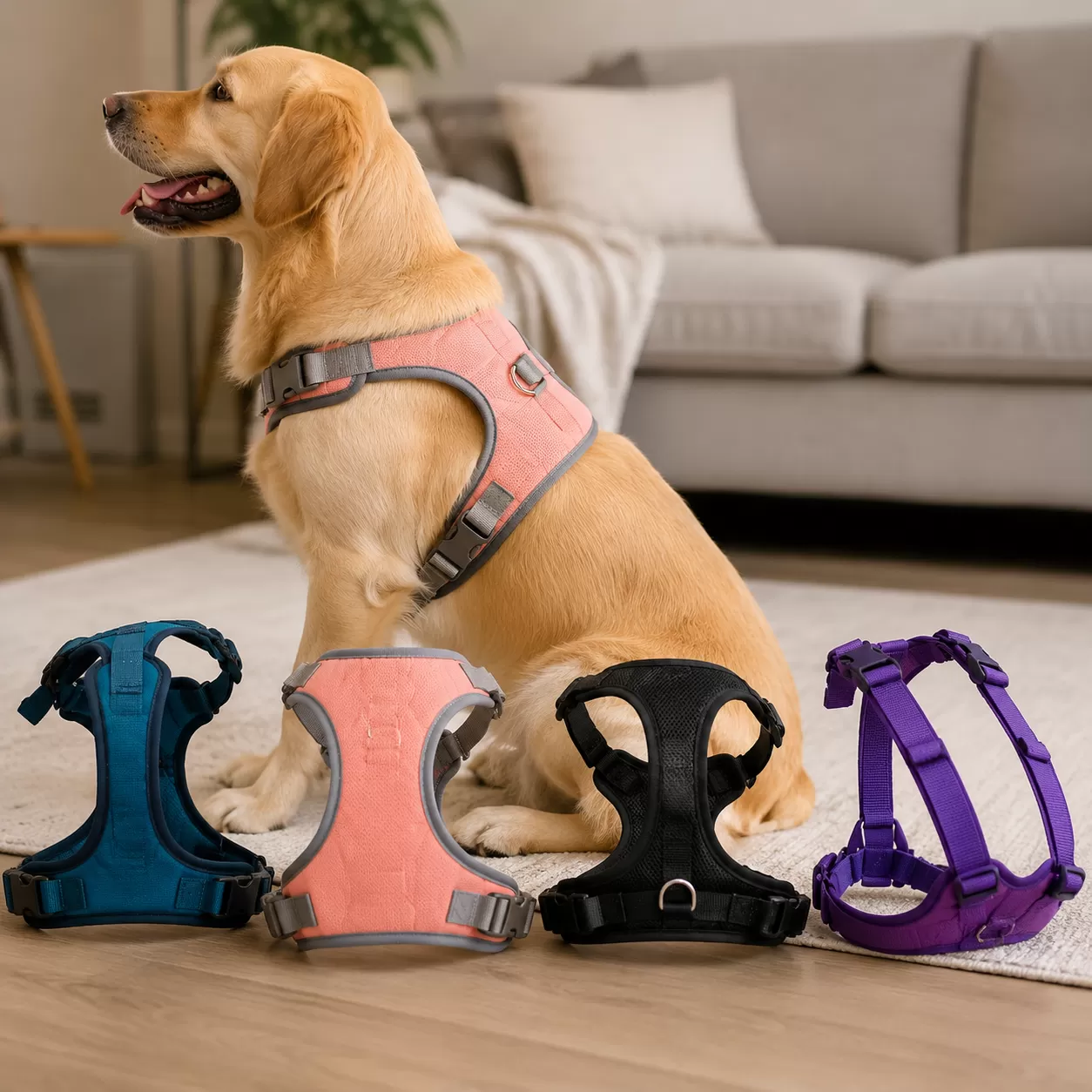
Overhead vest harnesses slide directly over the dog’s head and fasten around the torso. This silhouette offers the maximum surface area for padding, custom prints, and prominent brand logos. Because they distribute pressure evenly across the chest, they double perfectly as an escape-proof vest harness that keeps anxious dogs secure while maximizing comfort during long walks.
Step-In Harnesses: The Go-To for Head-Shy Dogs
Many dogs develop anxiety when gear is slipped over their sensitive ears and eyes. A step-in dog harness solves this pain point completely. The dog simply steps their front paws into the loops, and the harness fastens securely over the back. This user-friendly style is an absolute staple for small breeds and a top seller for owners who prioritize a quick, stress-free morning routine.
Y-Shape vs. H-Shape Ergonomics: Shoulder Movement
The internal skeletal structure of a harness dictates how safely a dog can move. Choosing the right design prevents long-term joint strain and injury.
- Y-Shaped Ergonomic Harness: This design contours perfectly around the dog’s neck and sits low on the chest bone. It leaves the shoulder joints completely free, allowing for an unrestricted, natural stride.
- H-Shape Harness: A classic, highly adjustable option that forms an ‘H’ across the dog’s back and chest. While it offers incredible security and prevents backing out, it must be properly fitted to ensure the front straps do not restrict forward shoulder extension.
| Harness Silhouette | Best For | Key Advantage |
|---|---|---|
| Overhead Vest | Medium to large breeds, heavy pullers | Maximum surface area for padding & brand patterns |
| Step-In | Small breeds, head-shy or anxious dogs | Quick, hassle-free adjustment and clipping |
| Y-Shape Ergonomic | Active dogs, running, long hikes | Zero shoulder restriction and optimal health |
Specialized Kinds of Dog Harnesses for High Performance
When expanding your pet brand, standard walking gear isn’t always enough. Catering to specific niches—like working dogs or minimalist owners—allows you to capture high-margin segments of the market. Understanding these specialized kinds of dog harnesses ensures your product line meets diverse consumer demands.
Tactical and K9 Working Harnesses
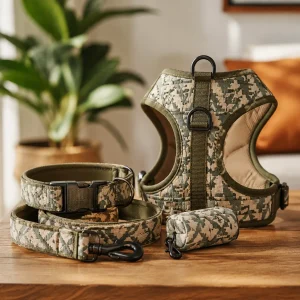
Built for durability and control, tactical training gear for dogs is a fast-growing retail sector. These heavy-duty structures are designed for working breeds, service animals, and outdoor enthusiasts who require maximum utility.
- Control Handles: Reinforced top handles for immediate physical restraint and lifting support.
- Heavy-Duty Hardware: Metal D-rings and heavy-duty quick-release buckles that withstand extreme pulling force.
- Patch Panels: Hook-and-loop strips for service dog patches, moral badges, or brand customization.
- MOLLE System: Nylon webbing loops for attaching small pouches, water bottles, or adventure gear.
Minimalist Strap Harnesses
On the opposite end of the spectrum, minimalist strap harnesses offer a lightweight, cost-effective solution for daily use. These designs prioritize simplicity, high adjustability, and low manufacturing costs, making them excellent entry-level products for your brand.
For brands looking to launch a rugged yet functional line, configuring a https://www.minardiphttps://www.minardipets.com/customized-dog-harness.html”>customized dog harness with specialized hardware creates an instant competitive edge in the premium pet market.
Performance Comparison: Tactical vs. Minimalist
| Feature | Tactical & K9 Harnesses | Minimalist Strap Harnesses |
|---|---|---|
| Primary Material | 1050D Nylon / Padded Oxford Fabric | High-Density Polyester Webbing |
| Weight Profile | Heavy-duty, structured | Ultra-lightweight, low profile |
| Adjustability | 2 to 4 point adjustment points | 4 to 5 point highly adjustable sliders |
| Production Cost | Higher due to complex stitching & hardware | Lower due to streamlined material use |
| Best For | Large breeds, training, hiking, working dogs | Small to medium breeds, hot weather, budget lines |
Material Engineering: Choosing Kinds of Dog Harnesses Fabrics That Sell
When designing different kinds of dog harnesses for your brand, material selection directly impacts your bottom line. The right fabric dictates retail pricing, durability, and customer satisfaction. We engineering our products using high-performance textiles tailored to specific seasonal demands and consumer expectations.
Key Fabric Options for Modern Harness Lines
- Breathable Air Mesh: This lightweight, self-cooling fabric is essential for summer product lines. It maximizes airflow, keeps dogs comfortable in hot weather, and serves as a major selling point for everyday walking gear.
- Padded Neoprene: Known for its weather-resistant properties, neoprene offers chafe-free comfort. It is the go-to material for premium, all-weather harnesses because it resists moisture and cushions the dog’s chest during sudden pulls.
- High-Density Nylon & Polyester Webbing: This forms the structural backbone of any high-quality harness. We use it to ensure superior tensile strength while allowing for vibrant, custom-printed patterns that elevate your brand’s visual identity.
- Reflective Elements: High-visibility stitching and glowing borders are now non-negotiable safety features for modern pet owners who walk their dogs at night or during early mornings.
| Fabric Type | Primary Benefit | Best Product Application |
|---|---|---|
| Air Mesh | Lightweight & Breathable | Everyday Summer Harnesses |
| Neoprene | Weather-Resistant & Cushioned | Premium Comfort & Active Wear |
| Nylon/Polyester | High Tensile Strength | Adjustable Straps & Custom Prints |
Choosing the right combination of textiles ensures your inventory aligns with current market demand. For businesses looking to scale their product offerings, we offer specialized options through our custom dog harness development services, matching fabric engineering with top-tier hardware to create retail-ready products.
Private Label vs. Custom Development: Building Your Product Line
When expanding a pet brand, choosing how to manufacture different kinds of dog harnesses determines how fast the brand grows and its overall profit margins. The choice comes down to leveraging proven, existing designs or building a completely new silhouette from scratch.
The Private Label Route: Fast-Track Market Entry
For brands looking to launch quickly without massive upfront R&D costs, choosing established https://www.minardhttps://www.minardipets.com/private-label-pet-products.html”>private label pet products is the most efficient path. This method utilizes field-tested, pre-existing harness structures that are already optimized for safety and comfort. Brands can easily inject their own identity through custom colorways, custom-printed webbing, and custom logo placements while bypassing the lengthy prototyping phase.
Bespoke Custom Product Development: Differentiating with Unique Silhouettes
For brands aiming to disrupt the market or solve a specific ergonomic problem, custom product development is the ultimate choice. This route allows for the creation of completely custom sewn dog harnesses with unique geometric cuts, specialized hardware placements, or proprietary materials. While it requires a higher initial investment, bespoke development creates strong brand defensibility and sets the product apart from standard wholesale options.
Comparing Manufacturing Routes
| Feature | Private Label Development | Bespoke Custom Development |
|---|---|---|
| Time to Market | Fast (Weeks) | Slow (Months of prototyping) |
| Upfront R&D Costs | Minimal to None | High |
| Design Control | Limited to colors, patterns, and logos | 100% custom silhouettes and hardware |
| Market Differentiation | Moderate (Via branding and aesthetics) | Maximum (Unique proprietary design) |
| Risk Level | Low (Using proven, market-tested shapes) | Higher (Requires extensive field testing) |
Choosing a Manufacturing Partner: What to Look For
Choosing the right factory to produce different kinds of dog harnesses determines whether a pet brand thrives or fails. A stunning design means nothing if the physical product falls apart during a routine walk. Partnering with a manufacturer that prioritizes structural integrity over rock-bottom pricing is the only way to build a sustainable business.
The Pitfalls of Cheap Production: How Weak Stitching Ruins Brand Reputation
Cutting corners on manufacturing costs always backfires. When producing heavy-duty pulling gear or a standard no-pull dog harness, structural failure is a major safety liability.
- The Box-X Stitching Standard: Cheap factories use basic linear stitches. High-quality harnesses require reinforced Box-X stitching at every critical tension point, especially around the D-ring attachments.
- Substandard Hardware: Lower-tier manufacturers often use brittle plastic buckles and thin zinc-alloy rings that snap under tension. Top-tier production relies on heavy-duty quick-release buckles and welded stainless steel hardware.
- Brand Erosion: One viral video of a snapped harness can permanently destroy customer trust. If a dog escapes because of poor craftsmanship, the brand carries the blame, leading to costly returns and negative reviews.
For brands expanding their product lines beyond walking gear, maintaining this level of structural integrity is just as vital as sourcing durable materials for other inventory, such as choosing the right dog chew toys that won’t splinter or choke a pet.
What Makes a Sample Retail-Ready? Testing Durability and Finishing
Before approving a production run for any wholesale dog walking gear, the golden sample must pass rigorous quality benchmarks. A retail-ready sample must excel in two main categories:
| Testing Metric | Retail-Ready Requirement |
|---|---|
| Tensile Strength Testing | The harness must withstand pull forces at least 5 times the maximum recommended weight of the target dog breed. |
| Webbing & Fabric Integrity | Edges of high-density nylon or padded neoprene harness materials must be cleanly heat-sealed to prevent fraying over time. |
| Component Alignment | The dual-clip harness structure must align perfectly, ensures symmetric pressure distribution without chafing the dog’s skin. |
| Aesthetic Finishing | No loose threads, crooked logo patches, or exposed raw edges that compromise the premium feel. |
FAQs About Kinds of Dog Harnesses and Manufacturing
What is the best harness style for large breeds?
For large and powerful breeds, a Y-shaped ergonomic harness featuring a dual-clip harness structure is the industry standard. This design distributes pulling force evenly across the dog’s chest, protecting the trachea while preventing the strap from restricting shoulder movement. When manufacturing for large dogs, incorporating heavy-duty quick-release buckles and reinforced nylon webbing is critical to handling high tensile stress.
How do I choose between mesh and neoprene for my brand?
The choice depends on your target market’s lifestyle and seasonal focus:
- Breathable air mesh fabric: Best for summer-focused lines, everyday lightweight wear, and small-to-medium breeds. It offers maximum ventilation but lower tensile resistance.
- Padded neoprene harness lines: Ideal for premium, all-weather, and high-durability collections. Neoprene is water-resistant, cushions against chafing, and adds a high-end feel to your product line.
For brands looking to launch a balanced collection, checking the https://www.minardiphttps://www.minardipets.com/top-10-dog-harness-2026.html”>top 10 dog harness options can provide insight into how successful brands mix these materials across different product tiers.
What are the typical MOQs for custom dog harnesses?
Minimum Order Quantities (MOQs) vary based on the level of customization:
- Private label pet products: Usually require a small MOQ of 100–300 pieces per color/size, as they utilize existing factory patterns.
- Bespoke custom sewn dog harness lines: Typically require 500–1,000 pieces per style due to custom fabric dyeing, unique hardware molding, and specialized pattern grading.
Can I add my logo to existing harness structures?
Yes. The fastest way to scale a brand is to add custom branding to proven, pre-existing molds. We offer multiple logo application methods depending on the harness style:
| Logo Type | Best Used For | Durability |
|---|---|---|
| Rubber PVC Badges | Tactical and outdoor vest harnesses | Extremely high, weatherproof |
| Woven Labels | Minimalist strap and step-in harnesses | High, classic retail look |
| Silicone Printing | Breathable air mesh chest panels | High flexibility, sleek profile |
Reviewing our dog collar, harness, and leash set sizing guide helps ensure your logo placement does not interfere with standard sizing adjustments or buckle placement during production.