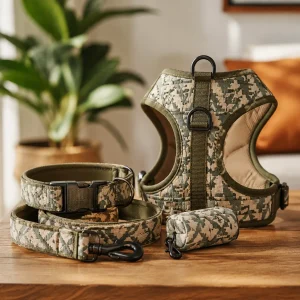
What is a Martingale Dog Harness?
We know the panic of a dog slipping out of their walking gear, and the sheer frustration of being dragged down the sidewalk by a heavy puller. Walking your dog should be a bonding experience, not a daily battle. To achieve that, you need a tool that offers absolute security without compromising your pet’s comfort. This is exactly where the martingale dog harness excels.
The Core Design: The Martingale Loop
Unlike traditional walking gear, a martingale harness is built with a specialized dual-loop system. The defining feature is the “martingale loop”—an integrated, floating length of webbing that attaches directly to your leash. When your dog is relaxed and walking politely by your side, this loop remains loose, allowing the harness to sit comfortably on their body.
How the Gentle Tightening Mechanism Works
The true value of this design reveals itself the moment your dog decides to pull or lunge.
- Action: As tension is applied to the leash, the martingale loop smoothly and gently tightens.
- Distribution: Instead of squeezing the sensitive throat area, the harness cinches slightly to apply even, mild pressure across the robust muscles of the chest and shoulders.
- Result: This gentle tightening mechanism acts as a humane cue, safely discouraging the dog from pulling without causing pain, gagging, or choking.
Martingale Harness vs. Standard Back-Clip Harness
When evaluating the different kinds of dog harnesses on the market, it is crucial to understand the mechanical differences between a martingale design and your average back-clip harness.
| Feature | Martingale Harness | Standard Back-Clip Harness |
|---|---|---|
| Mechanics | Loop gently tightens when the dog pulls. | Static design; does not change size when pulled. |
| Security | Acts as an escape-proof dog harness by snugging up to prevent backing out. | Loose fitting; easily spooked “Houdini” dogs can slip out. |
| Training Benefit | Communicates with the dog to stop pulling via distributed pressure. | Often triggers the dog’s opposition reflex, encouraging them to pull harder. |
By upgrading from a static design to a responsive martingale system, we can provide our dogs with a secure, comfortable fit that naturally promotes better walking habits.
Martingale Harness vs. Martingale Collar: Which is Better?
When we help dog owners upgrade their walking gear, the choice often comes down to a martingale harness versus a martingale collar. Both use the same tightening loop mechanism, but the way they handle pulling is entirely different.
The Martingale Collar Explained
A martingale collar features a main loop that slips over the neck and a smaller control loop attached to the leash. When the dog pulls, it tightens just enough to prevent escape without choking. It is no surprise that many owners actively search for the best martingale collar for their daily walks.
Pros and Cons of the Collar:
- The Good: Highly effective for breeds with narrow heads and thick necks. It physically prevents them from backing out of their gear.
- The Bad: All the tension goes directly to the neck. If your dog lunges or pulls consistently, this localized pressure can cause strain.
Why the Harness is the Safer Choice
For most everyday walks, a martingale harness is the superior and safer alternative.
- Zero Neck Strain: The harness shifts all the pressure to the strong chest and shoulder muscles, keeping the fragile trachea completely safe.
- Built for Power: If you are looking for a reliable heavy puller harness, the martingale harness gives you leverage and control without causing pain or coughing.
- Versatile Security: It works beautifully as a sighthound harness while offering the full-body support that a simple collar lacks.
Understanding how to choose the right dog collar and harness set for safety makes a massive difference in your daily routine. While a collar is great for quick trips or holding ID tags, the harness delivers the humane, escape-proof control needed for dogs that tend to pull, lunge, or spook easily.
Key Benefits of Using a Martingale Harness
When I design walking gear, safety and control are my top priorities. The martingale dog harness stands out because it solves the most common frustrations owners face: dogs slipping out of their gear and constant pulling. Unlike standard equipment, this design provides a dynamic fit that responds to your dog’s movements in real-time.
Escape-Proof Design for “Houdini” Dogs
Many dogs, especially those with narrow heads like Greyhounds or nervous rescues, can easily back out of a traditional harness. The martingale loop is the ultimate solution for an escape-proof dog harness. When a dog tries to retreat or pull backward, the loop cinches slightly, tightening the harness just enough to prevent them from slipping their front legs or head out. It offers peace of mind without the need for overly tight, restrictive straps.
Humane No-Pull Training
Traditional collars put immense pressure on the windpipe, while some harnesses actually encourage pulling by giving the dog a “sled dog” leverage point. A no-pull dog harness with a martingale mechanism works differently. It applies mild, evenly distributed pressure across the chest and shoulders. This tactile feedback discourages pulling through clear communication rather than pain or choking. It is one of the most effective dog leash training tools for teaching loose-leash walking.
Enhanced Handler Control
In high-distraction environments—like a busy park or a street with squirrels—you need better leverage. Our reflective K9 dog harness designs often incorporate these principles to ensure the handler stays in command. The martingale action centers the dog’s center of gravity, making it much easier to redirect their attention back to you without using force.
| Feature | Benefit to Handler | Benefit to Dog |
|---|---|---|
| Tightening Loop | Prevents the dog from escaping in a panic. | Ensures the harness stays secure and comfortable. |
| Pressure Distribution | Reduces the physical strength needed to lead. | No localized pressure on the neck or throat. |
| Responsive Fit | Provides instant feedback during training. | Clearer communication of boundaries. |
| Reinforced Hardware | Long-lasting durability for heavy pullers. | Reliable safety during every walk. |
By choosing a martingale dog harness, you are investing in a tool that prioritizes the physical health of your dog while giving you the confidence to navigate any environment safely. It bridges the gap between a standard walking accessory and a professional training tool.
Comparing Different Kinds of Dog Harnesses
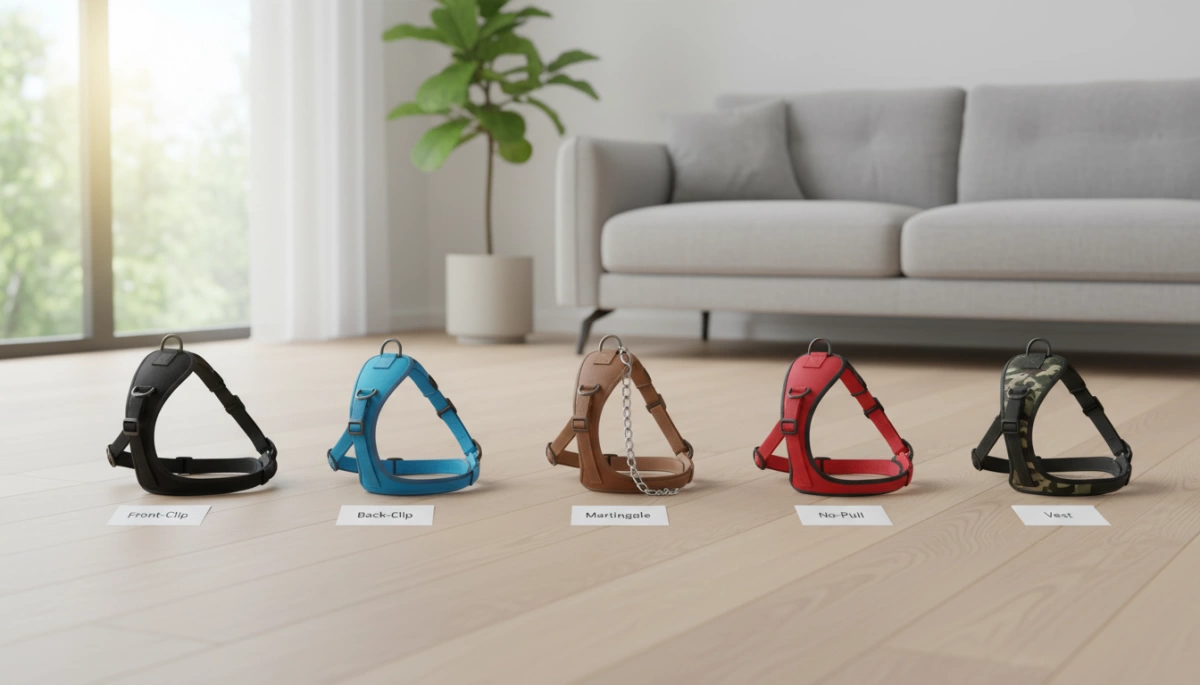
When shopping for dog walking gear, you will encounter several kinds of dog harnesses on the market. Each design serves a specific purpose, from basic daily walks to specialized training. Let’s break down the most common options and see how they compare.
Common Dog Harness Styles
- Front-Clip Harnesses: The leash attaches at the dog’s chest. When your dog pulls, the tension gently redirects their body back toward you. It is a solid training tool, but some designs can restrict natural shoulder movement if fitted incorrectly.
- Back-Clip Harnesses: The leash attaches at the dog’s back, keeping the leash away from their legs. This is ideal for calm, well-trained dogs. However, if your dog is a puller, a back-clip design actually triggers their opposition reflex, encouraging them to pull harder like a sled dog. For a relaxed daily walker, a lightweight adjustable dog harness with a back clip offers excellent comfort.
- Step-In Harnesses: These are incredibly easy to put on—your dog simply steps in, and you buckle it over their shoulders. While convenient, step-in harnesses are often the easiest for a panicked or stubborn dog to back out of and escape.
Where the Martingale Harness Fits In
The martingale dog harness sits in a unique spot within this ecosystem. It acts as the ultimate hybrid between security and humane training.
If you are debating a front clip vs martingale, the deciding factor is usually security. While a front-clip simply redirects the dog, the martingale harness features a gentle tightening mechanism. This loop applies even pressure around the chest when the dog pulls, instantly discouraging the behavior without choking. As soon as the dog stops pulling, the harness relaxes. Because the loop tightens just enough to prevent the harness from sliding over the dog’s head, it doubles as a highly effective escape-proof dog harness.
Harness Comparison Quick Guide
| Harness Type | Best Used For | Main Drawback |
|---|---|---|
| Front-Clip | Redirecting dogs that pull | Can restrict natural shoulder extension |
| Back-Clip | Calm dogs, running, hiking | Encourages heavy pullers to pull more |
| Step-In | Quick dressing, senior dogs | High risk of the dog backing out/escaping |
| Martingale | Houdini dogs, humane pull training | Requires precise adjustment for safety |
For owners dealing with a mix of pulling habits and escape attempts, the martingale design clearly outperforms standard styles, delivering enhanced handler control right when you need it most. If you prefer a simpler setup for a dog that already walks perfectly, a comfortable neoprene dog harness and leash set might be all you need. But for training and peace of mind, the martingale remains unmatched.
Is a Martingale Dog Harness Right for Your Dog?
While a martingale harness is an incredibly versatile piece of walking gear, it is not meant for every single situation. We find it works wonders for specific types of dogs who need extra security and gentle guidance. If you are currently evaluating this alongside other no-pull tools, understanding your dog’s daily behavior is the best starting point.
Ideal Candidates
- Rescue dogs and easily spooked pups: The escape-proof design prevents them from backing out of the gear if a loud noise or sudden movement startles them.
- Heavy pullers: It provides humane, even pressure across the chest and shoulders to naturally discourage pulling without causing pain.
- Narrow-headed breeds: Dogs with thick necks and narrow heads (like Greyhounds or Whippets) benefit greatly, as standard gear easily slips right over their ears.
When Not to Use a Martingale Harness
Because of the unique martingale loop mechanism, there are specific times you must remove this harness for your pet’s safety.
- Unattended wear: Never leave a martingale dog harness on your pet when they are home alone, playing indoors, or resting in a crate. The tightening loop can easily catch on furniture or wire, creating a serious hazard.
- Tie-outs: Do not use this harness to tie your dog out in the yard. If they lunge at a squirrel or get tangled around a tree, the loop will continuously tighten and cause distress.
How to Properly Fit and Use Your Martingale Harness
Getting the right fit for your martingale harness is the difference between a secure walk and a frustrated pup. I always recommend starting with a soft measuring tape to get the most accurate numbers before selecting your gear.
Sizing Guide for a Secure Fit
To ensure your dog is comfortable and secure, follow these measurement steps:
- Chest Girth: Measure the widest part of your dog’s ribcage, typically right behind the front legs. This is the most critical measurement for any no-pull dog harness.
- Neck Measurement: Wrap the tape around the base of the neck where a collar would naturally sit.
- Consult the Chart: Always prioritize the chest girth measurement if your dog falls between sizes.
The Two-Finger Rule
Once you have adjusted the straps, you must verify the tension. A properly fitted martingale harness should be snug but never restrictive. Use the “Two-Finger Rule”: you should be able to slide two fingers comfortably between the harness straps and your dog’s body. If the gap is wider, the dog may be able to back out; if it is tighter, it could cause chafing or restrict movement.
Training for Loose-Leash Walking
The martingale loop mechanism is a communication tool, not a punishment. To get the best results during training:
- Wait for Slack: When your dog pulls and the loop tightens, stop walking. Wait for the dog to turn back or create slack in the leash.
- Reward the Reset: The moment the leash goes slack and the harness relaxes, provide a treat or verbal praise.
- Consistency is Key: Use the gentle pressure of the harness to signal boundaries. Over time, your dog will learn that a relaxed harness leads to a more rewarding walk.
By focusing on a precise fit and positive reinforcement, you turn your dog walking gear into a bridge for better behavior and safer adventures.
Why Choose Minardipets for Your Dog’s Walking Gear?
At Minardipets, we focus on the intersection of safety, durability, and ergonomic design. We understand that a martingale dog harness needs to be more than just a training tool; it must be a reliable piece of safety equipment that stands up to daily wear and tear. Our commitment to quality ensures that every product we offer provides the security of the best martingale collar with the added comfort and control of a professional-grade harness.
Whether you are training a new rescue or managing a strong puller, our customized dog harness options are engineered to provide a perfect fit that prevents escaping without causing physical distress.
Premium Features of Minardipets Gear
We build our gear using high-performance materials that outperform the common kinds of dog harnesses found in big-box stores.
- Padded Chest Plates: We use breathable, soft padding to eliminate chafing and protect your dog’s skin during long walks.
- Reflective Stitching: Safety doesn’t stop when the sun goes down. Our harnesses feature integrated reflective threading for high visibility in low-light conditions.
- Reinforced Hardware: We utilize heavy-duty metal D-rings and high-tensile strength buckles to ensure the harness remains secure even if your dog lunges.
- Ergonomic Martingale Loop: Our tightening mechanism is calibrated to provide immediate feedback to the dog without the “choke” effect associated with traditional collars.
Minardipets vs. Standard Walking Gear
| Feature | Minardipets Martingale Harness | Standard Back-Clip Harness |
|---|---|---|
| Escape Prevention | High (Tightening loop prevents backing out) | Low (Dogs can often “pancake” out) |
| Pull Control | Excellent (Gentle pressure distribution) | Poor (Often encourages pulling) |
| Neck Safety | Total (Pressure is moved to the chest) | Moderate (Can still strain the neck) |
| Build Quality | Reinforced hardware & padded plates | Basic nylon & plastic |
| Night Visibility | Integrated reflective strips | Often missing |
We take pride in creating gear that empowers owners and protects pets. By choosing Minardipets, you are investing in a walking solution that prioritizes your dog’s anatomy and your peace of mind.
Frequently Asked Questions About Martingale Harnesses
Will a martingale harness choke my dog if they pull too hard?
No. The primary advantage of a martingale dog harness over a collar is that the tightening action happens around the chest and shoulders rather than the throat. While the best martingale collar is effective for many breeds, the harness version ensures there is zero pressure on the trachea. This makes it a much safer option for heavy pullers or dogs with respiratory sensitivities, as the force is distributed across the strongest parts of the dog’s body.
Can I leave a martingale harness on my dog all day?
I do not recommend leaving any tightening harness on an unattended dog. The martingale loop is designed specifically for active control and safety during walks. If left on all day, the loop could potentially snag on furniture, crates, or branches, posing a safety risk. For more information on choosing the right gear for different scenarios, you can review our guide on the top 10 dog harnesses for 2026.
How do I clean and maintain my dog’s harness?
Maintaining the integrity of various kinds of dog harnesses is essential for long-term safety and performance.
- Spot Clean: Use a damp cloth and mild soap for minor dirt or mud.
- Deep Clean: Hand wash in warm water with a pet-safe detergent to preserve the fabric strength.
- Drying: Always air dry the harness. Never put it in a machine dryer, as high heat can weaken the nylon webbing and damage the reflective stitching or plastic components.
- Inspection: Regularly check the martingale loop, D-rings, and buckles for any signs of fraying or mechanical wear to ensure the harness remains escape-proof.