The Golden Rule: The Two-Finger Test
The most reliable way to determine how should a dog harness fit is by using the “Two-Finger Rule.” This industry standard ensures the gear is secure enough to prevent escapes while remaining comfortable enough for long walks. I always recommend this test because it eliminates the guesswork and prioritizes your dog’s safety and range of motion.
How to Perform the Two-Finger Test
To check the fit, simply slide two fingers between the harness straps and your dog’s body. You should feel a slight pressure on your fingers, but they should still slide through without forcing them.
Where to test for a proper fit:
- The Neck: Check the top straps to ensure the harness isn’t pressing against the windpipe.
- The Chest: Verify that the front plate sits flat against the breastbone without gaping.
- The Girth: Test the strap that wraps around the ribcage, as this is the most common area for dog harness chafing.
Why “Snug but Not Tight” is the Standard
Finding the balance between a loose and tight fit is critical for dog walking safety. A harness that is too loose allows the dog to back out of the gear or causes the material to rub against the skin, leading to irritation. Conversely, a harness that is too tight can restrict the shoulder blade mobility and cause “muffin-topping” around the straps, which is painful for the animal.
| Fit Level | Result |
|---|---|
| Too Loose | Dog can escape; harness rotates and causes tripping. |
| Too Tight | Restricts breathing; causes skin sores and fur loss. |
| Two-Finger Fit | Snug but not tight; keeps the dog secure and comfortable. |
By maintaining this standard, you ensure the harness stays in place during sudden movements while protecting your dog’s delicate soft tissue and joints.
Pre-Fit Preparation: How to Measure Your Dog
To understand exactly how should a dog harness fit, I always start with accurate measurements. Guessing based on breed size rarely works because canine anatomy for harnesses varies wildly from dog to dog. Before buying anything, grab a soft measuring tape. If you don’t have one, a piece of string and a standard ruler will get the job done.
Here are the three key measurements you need to take:
| Measurement | How to Measure | Why It Matters |
|---|---|---|
| Neck Girth | Wrap the tape around the thickest part of the lower neck, near the shoulders. | Ensures the neck opening won’t restrict breathing or cause choking. |
| Chest Girth | Measure the widest part of the ribcage, just behind the front legs. | The chest girth measurement is the absolute most critical metric for a secure, escape-proof fit. |
| Weight | Weigh your dog on a standard scale. | Acts as a secondary metric for the dog harness sizing chart to ensure the buckles can handle the pulling force. |
While weight is commonly listed on packaging, it should never be your primary guide. Muscle and fat distribute differently on every dog. Always use weight as a backup metric when checking a dog collar and harness sizing guide to confirm the hardware and adjustable nylon straps are rated for your dog’s specific mass.
Pro-Tip for Accuracy: Always measure your dog while they are standing squarely on all four legs. If your dog is sitting or lying down, their chest expands and their posture shifts. Measuring a sitting dog will almost always result in inaccurate numbers and a poorly fitting harness.
Step-by-Step: Fitting Different Dog Harness Types
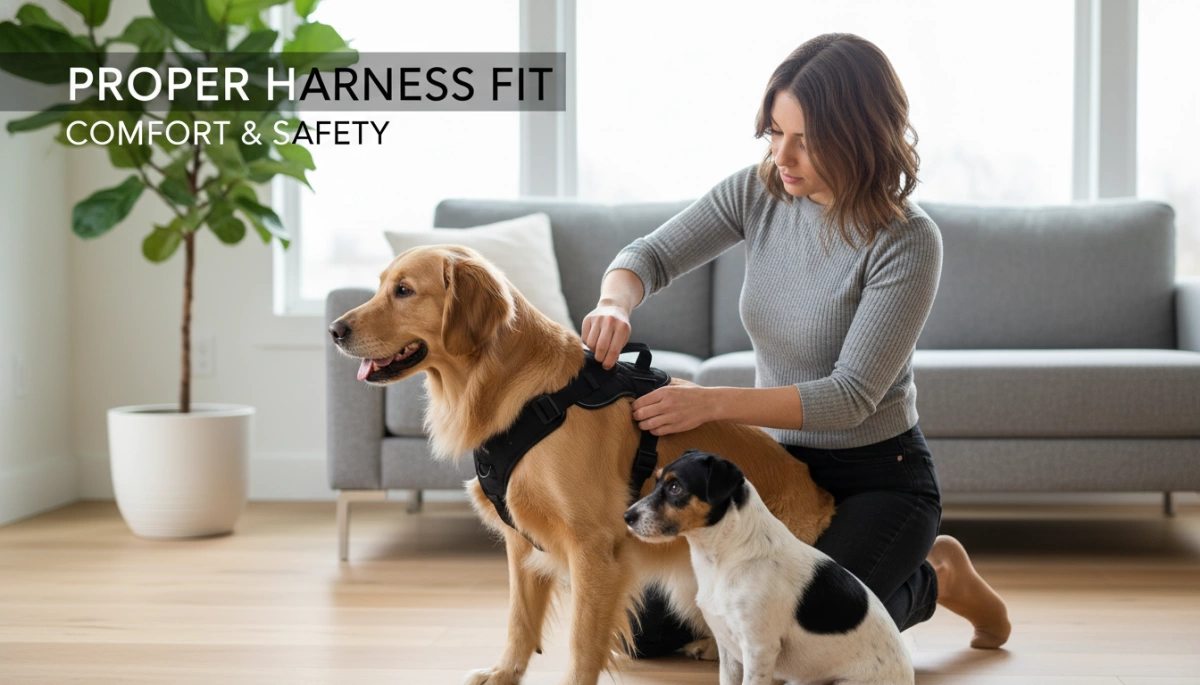
Understanding exactly how should a dog harness fit depends heavily on the specific style you are using. While the core principles remain the same, the application varies. If you are still exploring your options, checking a comprehensive dog harness guide can help you identify the best structure for your dog’s daily routine.
Here is how to properly fit the three most common dog harness types.
Over-the-Head Harnesses
These harnesses slip directly over your dog’s neck before clipping around the chest. The primary fitting goal here is ensuring the neck opening sits low enough on the chest. It must not ride up into the throat or sit too tightly across the shoulders. I always check that the straps allow for full shoulder blade mobility. If the harness restricts the natural forward reach of your dog’s front legs, it is sitting too high.
Step-In Harnesses
Figuring out how to wear dog harness designs that require stepping in can sometimes confuse owners. Your dog places its front paws into two loops, and the harness pulls up to clip at the back. The critical fitting point is the chest piece. The resulting “V” or “Y” shape must sit perfectly centered on the dog’s breastbone. Use the adjustable nylon straps to ensure the harness does not twist or sag to one side, which can cause uneven pressure during walks.
No-Pull and Front-Clip Harnesses
When evaluating front-clip vs. back-clip options, front-clip harnesses require the most precise adjustments. The strap connecting the front ring must sit horizontally straight across the breastbone. If this front strap sags, it will drop down toward the dog’s knees and cause a tripping hazard. When fitting a lightweight adjustable dog harness with a front-clip feature, tighten the shoulder and girth straps first to keep that front chest strap elevated and secure.
Quick Fitting Reference
Visualizing a how to put on a dog harness diagram is easier when you break down the primary focus areas for each style:
| Harness Style | Primary Fitting Focus | Common Mistake to Avoid |
|---|---|---|
| Over-the-Head | Neck opening and shoulder clearance | Straps blocking natural shoulder movement |
| Step-In | Centering the chest straps | Allowing the “V” shape to twist or sit off-center |
| Front-Clip | Horizontal placement of the chest strap | Leaving the front strap loose enough to cause tripping |
Visual Checklist: Signs of a Perfect Fit
Once the harness is secured, a quick visual inspection ensures your dog’s safety and comfort. Understanding canine anatomy for harnesses is the best way to guarantee a full range of motion without causing long-term physical strain. Use this checklist to verify the fit:
- The “Y” Shape and Breastbone Alignment: A well-fitted harness should form a clear “Y” shape across the chest. The center of this “Y” must rest firmly on the breastbone (sternum) rather than the soft tissue of the neck. This creates a true no-choke design that distributes pressure across the skeletal frame instead of the windpipe.
- Total Shoulder Blade Mobility: Watch your dog walk from the side. The straps should not overlap or obstruct the scapula (shoulder blade). Maintaining shoulder blade mobility is critical; if the harness blocks the shoulder, it forces an unnatural gait that can lead to joint inflammation or muscle soreness.
- Armpit Clearance: One of the most common mistakes is a girth strap that sits too far forward. To avoid harness rubbing armpits, ensure the strap is positioned roughly 2 to 3 inches behind the front legs. This gap prevents the material from pinching the sensitive skin in the “armpit” area during every stride.
- Level Straps: The harness should sit level on the dog’s body. If the back piece is tilting significantly to one side or the chest strap is sagging toward the floor, the tension is uneven, and the harness needs further adjustment.
Quick Reference Fit Table
| Feature | Correct Placement | Incorrect Placement |
|---|---|---|
| Chest Strap | Centered on the breastbone | Resting on the throat/windpipe |
| Shoulder Straps | Clear of the shoulder blade | Restricting the front leg swing |
| Girth Strap | 2-3 inches behind front legs | Tucked directly into the armpits |
| Back Plate | Centered along the spine | Sliding or rotating to the side |
By confirming these visual markers, you ensure that how a dog harness should fit translates to a safe, ergonomic experience for your dog. A perfect fit means the gear stays out of the way of their natural movement while providing total control.
Red Flags: Signs Your Harness is Fitting Incorrectly
Understanding exactly how should a dog harness fit means knowing what a bad fit looks like. Ignoring these warning signs can compromise your dog walking safety and lead to long-term physical discomfort for your pet.
Signs It Is Too Tight
A harness that digs into your dog’s body restricts movement and causes painful friction. Watch out for these clear indicators:
- Skin Irritation: Look for red skin, bald patches, or severe dog harness chafing, especially behind the front legs.
- “Muffin-Topping”: If your dog’s skin or fur bulges out heavily around the adjustable nylon straps, the gear is fastened too tightly.
- Movement Resistance: A dog that suddenly refuses to walk, sits down frequently, or walks with a stiff gait is likely in pain.
Signs It Is Too Loose
A loose harness is a major safety hazard. Even an escape-proof dog harness will fail if it isn’t adjusted properly to your dog’s canine anatomy.
- Side Rotation: The harness constantly slides or rotates to one side of your dog’s back during a normal walk.
- Sagging Chest Strap: The front or bottom straps hang loosely away from the body rather than sitting flush against the chest.
- The Back-Out Risk: If your dog can pull backward and easily slip their elbows through the straps, the harness is dangerously loose.
If you constantly battle with gear that is either too tight or too loose despite your best adjustments, upgrading to a custom dog harness built directly for your dog’s specific measurements is the most effective way to guarantee a safe, comfortable fit every time.
Specialized Sizing for Different Breeds and Ages
When figuring out how should a dog harness fit, I always tell my customers that a “one size fits all” approach doesn’t work for every dog. Different life stages and body types require specific adjustments to ensure safety and comfort.
Puppies and Growth Spurts
Puppies grow incredibly fast, sometimes changing size in a single week. If you are using an adjustable dog harness, you must perform the “two-finger test” every few days.
- Weekly Checks: Ensure the straps aren’t becoming too tight as the puppy fills out.
- Room to Grow: Choose a harness with a wide adjustment range to avoid buying a new one every month.
- Weight Monitoring: Use weight as a guide, but always prioritize physical measurements during growth phases.
Deep-Chested Breeds
Breeds like Greyhounds, Boxers, and Dobermans have unique proportions—narrow necks but very deep ribcages. For these dogs, a standard harness often slips or rubs.
- Extra Adjustment Points: Look for designs with five or more adjustment points to contour to their steep chest-to-waist ratio.
- Stability: A high-quality no pull dog harness provides the necessary chest plate stability to prevent the gear from shifting into the armpits.
- Y-Shape Design: This is essential for deep-chested breeds to ensure the pressure stays on the breastbone and off the soft throat area.
Long-Haired Breeds
For dogs with thick or long coats, the fit can be deceptive. The fur often creates “false bulk,” making the harness seem tighter than it actually is.
- Buckle Safety: Always clear fur away from buckles before snapping them shut to prevent painful pinching or entanglement.
- Material Choice: I recommend smooth nylon or padded straps that won’t mat the fur.
- Skin Contact: When testing the fit, make sure your fingers are touching the dog’s skin, not just the top of the fluff, to get an accurate read on tension.
Maintenance and Safety Checks for Long-Term Use
A dog harness is a piece of safety equipment that requires regular inspection to remain effective. Even the highest quality gear can degrade over time due to UV exposure, moisture, and the sheer force of a pulling dog. To maintain a secure fit and ensure dog walking safety, I recommend a quick “pre-flight” check before every outing.
Inspecting for Wear and Tear
Daily use leads to friction. Periodically examine the entire harness for these specific warning signs:
- Fraying Straps: Look for thinning or “fuzzy” edges on the adjustable nylon straps, which indicate the material is weakening.
- Cracked Buckles: Inspect heavy-duty buckles for hairline fractures or dirt buildup that might prevent them from clicking securely.
- Stitching Integrity: Check the “box-X” stitching at high-tension points, such as the leash attachment rings.
Environmental Adjustments
Weather conditions directly impact how a dog harness fits. If your dog enjoys swimming or walking in heavy rain, be aware that materials like nylon can expand when wet and stiffen or contract as they dry. Always re-adjust the sliders after the harness has dried to ensure it hasn’t become dangerously loose or uncomfortably tight.
Seasonal Sizing and Layering
Your dog’s physical profile changes with the seasons, especially if they have a thick winter coat or if you use external layers. When pairing gear with the best dog winter coats, you must loosen the harness straps to accommodate the extra fabric. A harness fitted for a summer coat will be far too restrictive when buckled over a puffer vest or fleece. Conversely, remember to tighten the straps back to the standard “two-finger” tension once the coat is removed in the spring. Regular re-fitting ensures the harness remains escape-proof regardless of the season.
FAQs: How Should a Dog Harness Fit?
Understanding the nuances of gear safety helps prevent injuries and ensures your dog actually enjoys their walks. Here are the most common questions I hear regarding harness fit and daily use.
Can a dog wear a harness all day?
I do not recommend leaving a harness on 24/7. Even with high-quality adjustable nylon straps, constant friction can lead to dog harness chafing and skin irritation. It is best to remove the harness once you are back indoors to allow the skin and coat to breathe.
How do I know if the harness is hurting my dog?
Keep an eye out for these physical and behavioral red flags:
- Physical Signs: Redness under the armpits, thinning fur, or “muffin-topping” where the skin bulges around the straps.
- Behavioral Signs: Your dog “freezes” when the harness is put on, hides when they see it, or walks with a stiff, unnatural gait.
If you notice these issues, you may need to re-evaluate your dog harness sizing chart or switch to a different style. For those looking for the most comfortable options available, I’ve reviewed the top 10 dog harnesses for 2026 to help you find a better match.
Should I leave the harness on indoors?
No. Aside from comfort, leaving a harness on indoors is a safety hazard. Straps and buckles can easily snag on furniture, crates, or even another dog’s teeth during play, which can lead to panic or injury.
What should I do if my dog is between harness sizes?
When a dog’s measurements fall between two sizes, the general rule is to size up. A larger harness provides more room for adjustment and ensures the straps don’t dig into the chest or neck. You can then use the sliders to create a snug fit that doesn’t compromise shoulder blade mobility. Always prioritize the chest girth measurement over weight when making your final choice.