Why Proper Dog Collar Adjustment is Crucial for Safety
Finding the right fit for your dog’s collar isn’t just about style; it’s about basic safety. If you’ve ever wondered how to adjust dog collar settings correctly, you’re likely trying to prevent one of two extremes: a collar that’s a choking hazard or one that’s an invitation for an escape artist.
The Risks of a Loose Collar
A loose collar is a liability. When the strap isn’t snug, your dog can easily back out of it during a walk, leading to dangerous “off-leash” situations in traffic or unfamiliar areas.
- The Slip-Out: Dogs with narrow heads (like Greyhounds) can slip out in seconds.
- Snagging Hazards: Loose loops can get caught on furniture, fences, or even another dog’s jaw during play, leading to panic or injury.
The Dangers of an Overly Tight Collar
On the flip side, tightening the collar too much is equally dangerous. A collar that is too tight restricts the airway and can cause long-term damage to the trachea.
- Respiratory Distress: Constant pressure on the windpipe leads to coughing and gagging.
- Increased Eye Pressure: In some breeds, neck restriction can actually increase intraocular pressure.
The Impact on Fur and Skin Health
We focus heavily on high-quality nylon webbing strap materials because poor fit combined with cheap materials destroys a dog’s coat. A collar that isn’t adjusted properly causes constant friction.
| Issue | Cause | Result |
|---|---|---|
| Skin Chafing | Too tight or rough edges | Raw spots and rashes |
| Matting | Constant shifting of a loose collar | Knotted fur around the neck |
| Hair Loss | Persistent rubbing | Permanent “collar line” baldness |
Properly learning how to adjust dog collar hardware ensures your pet stays secure without sacrificing their comfort or skin integrity. Whether you are using a quick-release buckle or a sliding adjuster, the goal is a balanced fit that respects the dog’s anatomy.
How to Measure for Perfect Dog Collar Adjustment
Getting the right dog neck measurement is the crucial first step before you learn how to adjust dog collar hardware. A precise measurement prevents the collar from choking your dog or slipping over their head.
The Measuring Tape Method
The most reliable way to measure is with a flexible fabric measuring tape. Wrap the tape around the base of your dog’s neck where the collar naturally sits. Keep the tape snug against the dog, but do not pull it tight.
The Household Hack
If you do not have a flexible measuring tape, use a piece of string, twine, or a charging cable. Wrap it around the neck, mark the exact point where it meets, and lay it flat against a rigid ruler or hardware tape measure to find the total length.
Where to Measure
Always measure at the base of the neck, just above the shoulders. This is wider than the area right behind the ears, ensuring the collar rests comfortably during daily walks. For alternative walking tools like a head halter, you can check our guide on how to choose and use a gentle lead for dogs to understand different fitting locations.
Accounting for Thick Fur and Growth
Dog coats and age change how a collar sits. Use these quick rules to adjust your measurement:
- Thick Fur: Press the measuring tape through dense fur until it contacts the skin. Do not measure on top of fluffy coats, or the collar will slide off.
- Puppy Growth Adjustment: Puppies grow rapidly. Add 1 to 2 inches to their current measurement when buying a collar to allow room for ongoing adjustments.
Step-by-Step: How to Adjust Different Types of Dog Collar Hardware
Adjusting a dog collar correctly depends entirely on the type of hardware it uses. Different locking systems require specific adjustments to keep your pet secure without causing discomfort.
Type 1: The Standard Slide Adjuster (Tri-Glide / Ladder Lock)
The plastic tri-glide slider is the most common hardware found on a standard nylon webbing strap. It allows for seamless length adjustments but can be tricky if the webbing is stiff.
- Loosen the strap: Hold the quick-release buckle with one hand and pull the top layer of the webbing away from the slider to create a slack loop.
- Shift the slider: Move the plastic tri-glide slider closer to or further from the buckle, depending on whether you need to size up or down.
- Flatten the webbing: Pull the bottom layer of the strap taut to eliminate the loop and smooth out the collar.
Type 2: Traditional Pin/Belt Buckles
Common on leather and heavy-duty collar lines, the traditional metal pin buckle adjusts just like a human belt.
| Step | Action | Pro-Tip |
|---|---|---|
| 1. Unbuckle | Pull the strap out of the metal keeper loops entirely. | Keep the dog calm and seated. |
| 2. Select Hole | Move the pin to a tighter or looser pre-punched hole. | Never punch amateur holes; it weakens the material. |
| 3. Secure | Thread the excess strap back through the keepers. | Ensure the strap stays flat against the neck. |
Type 3: Martingale and Escape-Proof Collars
A martingale collar fit requires precise calibration because it features a unique dual-loop system designed to prevent dogs from backing out of their gear.
- Adjust the large loop: Slide the adjuster until the collar slips comfortably over your dog’s head.
- Test the tension: Pull up on the smaller control loop (where the leash attaches).
- Check the gap: When the control loop is pulled fully taut, the two metal rings on the large loop should never meet. There must be a two-finger distance between them to ensure it does not choke the dog.
For deep-chested breeds or notorious escape artists, combining this hardware style with a properly fitted lightweight adjustable dog harness offers the ultimate dual-connection safety setup.
How to Verify the Perfect Fit: The Golden Rules for How to Adjust Dog Collar Sizing
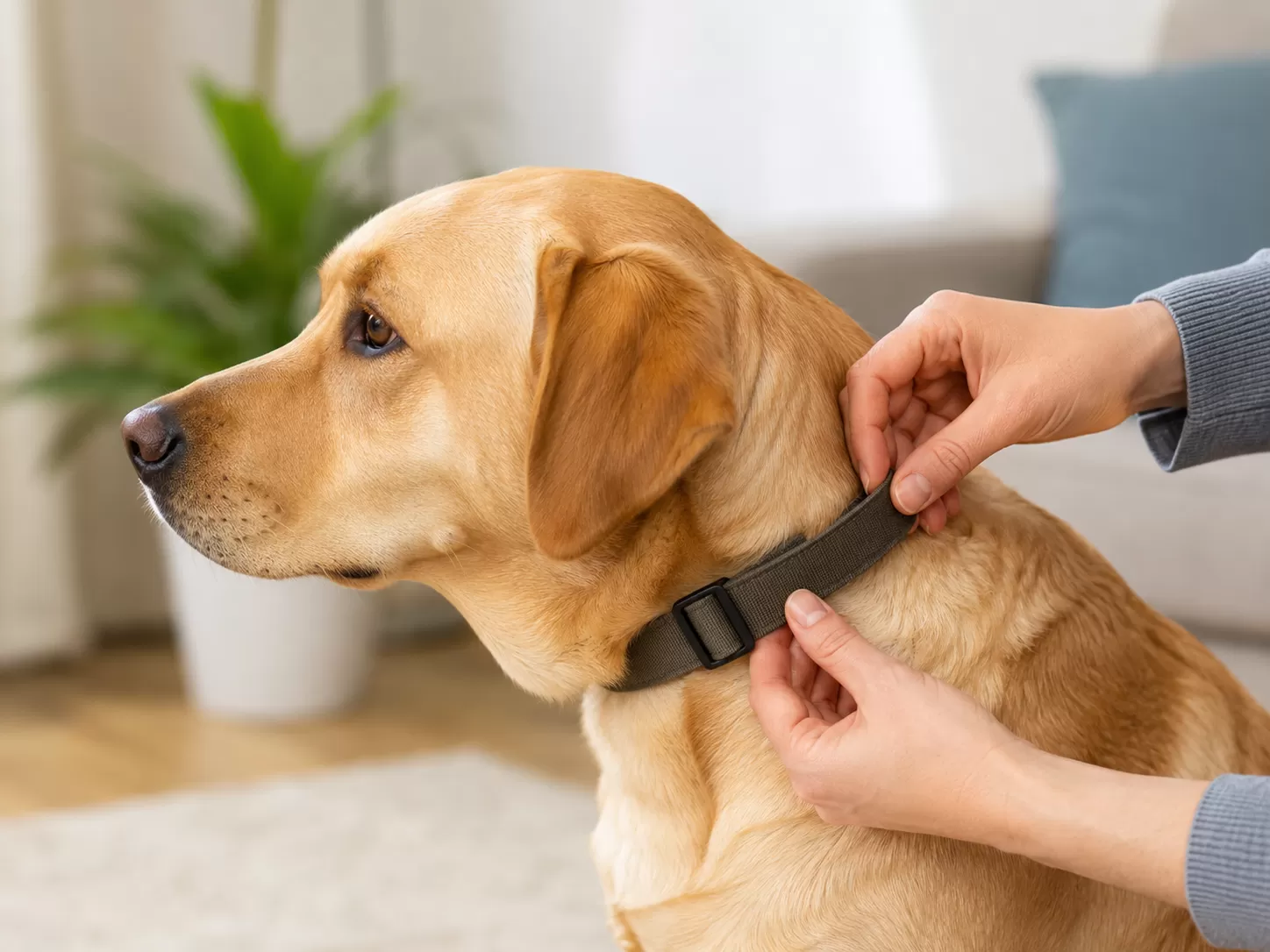
Getting the hardware adjusted is only half the battle. You must verify the fit to ensure your dog is both secure and comfortable. Use these three field-tested rules to confirm you have achieved the perfect fit.
The “Two-Finger” Safety Test Explained
The two-finger rule is the gold standard for checking collar tightness.
- The Action: Slide your index and middle fingers flat between the dog’s neck and the collar.
- The Result: Your fingers should slip in snugly without forcing them, and the collar should not compress the dog’s neck.
- Small Dogs vs. Large Dogs: For toy breeds, use one finger. For massive, long-haired breeds, ensure two fingers fit firmly against the actual neck skin, not just the fluff.
The “Pull Test”
Dogs are masters at backing out of their gear when startled. The pull test prevents an unexpected escape.
- Grip the collar firmly at the back of the dog’s neck.
- Gently pull forward toward the ears.
- If the collar slides over the main bulk of the head or ears, it is too loose. Go back and tighten the nylon webbing strap via the slider.
The Dynamic Check
A collar that fits perfectly while a dog sits might change completely when they move.
Pro Tip: Watch your dog sniff the ground and run around. The collar should stay in place without sagging down to the shoulders, and it should never cause gasping, coughing, or skin chafing.
If you notice your dog scratching at their neck frequently during movement, check for friction points. While adjusting to a new routine can sometimes make a pup anxious, keeping them engaged with high-quality distractions can help. Distracting a stressed pup with top-tier teething chew toys for puppies can redirect their nervous energy while they get used to a newly adjusted collar.
Common Troubleshooting: How to Adjust Dog Collar Fit Issues
Even with the right measurements, adjusting a dog collar perfectly can sometimes come with a few hurdles. Here is how to handle the most common fit issues to ensure your dog stays safe and comfortable.
The Slider Keeps Slipping
If you notice the collar slipping loose throughout the day, the culprit is usually low-quality hardware or a slick nylon webbing strap.
- The Fix: Double-check that the strap is threaded correctly through the plastic tri-glide slider. A single misdirection will cause the collar to back out under tension.
- Pro Tip: If the hardware is worn out, it is time to upgrade to a collar built with heavy-duty pet hardware that locks the strap firmly in place. For alternative walking setups that prevent slipping entirely, a properly fitted dog slip lead can also offer excellent control during training sessions.
The “In-Between Sizes” Dilemma
Dogs frequently fall right between a medium and a large size.
- Size Up: Always choose the larger size. Adjusting a larger collar down to its minimum capacity is much safer than stretching a smaller collar to its absolute maximum limit.
- Check the Width: Ensure the larger size isn’t too wide or heavy for your dog’s neck. A collar that is too bulky can cause skin chafing.
Puppy Collar Growth Adjustment
Puppies grow incredibly fast, meaning a perfect fit today could be dangerously tight by next week.
| Growth Management Step | Frequency | Action Item |
|---|---|---|
| Routine Checks | Every 3–4 days | Perform the two-finger rule test. |
| Hardware Inspection | Weekly | Ensure the quick-release buckle still operates smoothly without jamming. |
| Scale Up | Ongoing | Replace the collar entirely once the puppy collar growth adjustment reaches its maximum limit. |
What Makes a Dog Collar Seamlessly Adjustable? A Manufacturing Perspective
As pet gear manufacturers, we know that learning how to adjust dog collar hardware smoothly comes down to how the product is built. A seamless adjustment experience depends on the raw materials and components chosen during production. When we design retail-ready pet gear, we balance flexibility, durability, and ease of use for the end consumer.
Our manufacturing process focuses on three core elements to ensure every collar adjusts effortlessly:
High-Strength Webbing Material
The foundation of any adjustable collar is the strap. We utilize premium nylon webbing strap materials that offer a smooth texture. This prevents the fabric from bunching or catching inside the adjusters.
Premium Hardware Selection
Choosing the right heavy-duty pet hardware is critical. A high-quality plastic tri-glide slider or zinc alloy buckle allows the webbing to slide smoothly when manual pressure is applied, yet locks firmly in place during daily wear to prevent the collar slipping loose.
Enhanced Visibility Features
Safety doesn’t stop at fit. Integrating components like a reflective dog collar strip ensures visibility during low-light walks without compromising the flexibility of the adjustment points.
Manufacturing Standards for Adjustable Collars
| Component | Material Type | Performance Impact on Adjustment |
|---|---|---|
| Strap Base | High-tensile nylon / Polyester | Smooth gliding through sliders; resists fraying |
| Adjustment Slider | POM plastic / Zinc alloy | Holds the adjusted position without slipping |
| Main Fastener | Quick-release buckle | Allows fast removal without losing the size setting |
For brands looking to build a cohesive product line, choosing the right material combinations is essential. You can explore our https://www.minardiphttps://www.minardipets.com/dog-leash-guide-materials.html”>comprehensive guide on dog leash and collar materials to see how we select webbing that balances structural strength with easy adjustability.
Designing the Perfect Adjustable Collar Line with minardipets
When you are building a standout brand, understanding how to adjust dog collar dimensions seamlessly is just the baseline. You need a manufacturing partner that translates that functionality into a retail-ready product line. At minardipets, we engineer adjustable collars that combine flawless mechanical utility with premium aesthetics, helping your brand dominate the global pet market.
Bespoke Sizing Flexibility
Every dog breed has a unique build, meaning a one-size-fits-all approach always fails. We design our adjustable collar lines with extended adjustment ranges, allowing a single collar to span multiple neck sizes comfortably. By utilizing high-density nylon webbing strap and flexible materials, we ensure the slider moves smoothly without bunching, providing a tailored fit for everything from growing puppies to full-grown large breeds.
Private Label vs. Custom Development
We offer two distinct paths to bring your vision to life:
- Private Label Dog Collars: Choose from our proven, pre-engineered base designs and add your custom logos, exclusive colorways, and branded hardware. This is the fastest route to market.
- Custom Development: Build a completely proprietary collar from scratch. Whether you want to integrate a specialized quick-release buckle or source unique biothane collar materials for a waterproof edge, our engineering team handles the blueprint-to-production process.
Low MOQ Solutions
Launching a new product line shouldn’t require massive financial risk. We support growing brands and established retailers alike by offering low Minimum Order Quantity (MOQ) solutions. This allows you to test new color trends, seasonal patterns, or hardware upgrades without tying up all your capital in inventory.
Through our comprehensive private label pet products program, we deliver high-end, heavy-duty pet hardware and flawless craftsmanship directly to your warehouse, fully retail-ready.
Frequently Asked Questions (FAQs)
How often should I check my puppy’s collar fit?
Check your puppy’s collar at least once a week. Puppies grow incredibly fast, and a fit that was perfect a few days ago can quickly become dangerously tight. As a rule of thumb, inspect the adjustment during daily grooming or playtime to ensure it still passes the two-finger rule. For older dogs, a monthly check is usually sufficient, unless you notice changes in their weight or coat density.
What should I do if my dog is between sizes?
If your dog’s neck measurement falls right between two standard sizes, always size up. A larger collar adjusted to its smallest setting offers a safer, more comfortable fit than a smaller collar maxed out to its limit. If you find that standard collars just don’t fit right, you might want to learn how should a dog harness fit as an alternative walking option that avoids neck pressure entirely.
Can a collar be too heavy for a small dog?
Yes. A collar that is too heavy or wide can strain a small dog’s neck and cause discomfort. When learning how to adjust dog collar hardware for toy or small breeds, ensure the webbing width and buckle weight match their size. Heavy-duty metal hardware belongs on large breeds; small dogs need lightweight, high-strength plastic or slim aluminum components.
Why does my dog’s collar keep loosening on its own?
A collar slipping loose is usually caused by low-quality webbing or a worn-out plastic tri-glide slider. If the nylon webbing strap is too smooth or thin, it lacks the friction required to stay locked in place under tension. Upgrading to a collar built with premium, high-traction webbing and a heavy-duty lock mechanism prevents the hardware from sliding out of its secure position during walks.