Breaking Down the Anatomy: What Is a Prong Collar?
When you first see a prong collar, it can look intimidating. However, as a mentor in the training space, I view it as a precision tool designed for clear communication. Also known as a pinch collar for dogs, its anatomy is engineered for safety and balanced feedback rather than force.
The Martingale Loop Mechanism
The heart of the collar is the Martingale loop mechanism. This center chain section is a critical safety feature that ensures the collar only tightens to a fixed diameter. Unlike a traditional choke chain that has no limit, the Martingale loop provides a definitive “stop,” protecting your dog’s throat while delivering a clear physical cue.
Blunted Metal Links vs. Sharp Points
A common misconception is that these collars are meant to pierce or “stab” the skin. Quality training collars use blunted metal links designed to distribute pressure evenly.
- Rounded Ends: High-quality links are machined to be smooth and flat.
- Sensation: They mimic the natural “nip” a mother dog gives her pups, creating a localized pressure sensation that is easy for a dog to understand.
- Safety Check: The tips should never be sharp or jagged. If they are, the tool is poorly manufactured and unsafe.
Stainless Steel vs. Polymer Materials
The material of the collar dictates its durability and the “crispness” of the signal you send to your dog.
- Stainless Steel: This is the gold standard. It is rust-proof, heavy-duty, and provides the most reliable feedback.
- Polymer Materials: Some modern versions use high-strength plastic. While these are lighter and look less “industrial,” they often lack the long-term durability and the precise mechanical “click” of metal links.
In my experience, choosing a high-quality stainless steel model ensures that the tool remains a reliable communication device for the life of your dog.
How It Works: Communication vs. Correction
Understanding what is a prong collar for dogs starts with moving away from the idea of “punishment” and focusing on communication. The primary mechanism is pressure and release training. When a dog lunges, the collar applies even, distributed pressure around the neck. As soon as the dog yields, that pressure is instantly released. This clear “yes/no” feedback is why it remains one of the most effective dog leash pulling solutions for high-drive pets.
Mimicking Natural Canine Communication
I have found that this tool bridges the communication gap because it mimics how dogs interact. The sensation is similar to a mother dog using her mouth to provide a firm, corrective “nip” to a puppy. It is an intuitive language they already understand. Because the pinch collar for dogs engages these natural instincts, it often stops pulling behavior much faster than a standard collar.
The Power Steering Effect for Big Dogs
For owners of large or powerful breeds, this tool provides what we call the “power steering” effect. It allows a handler to maintain control without needing raw physical strength. If you are still weighing your options, I suggest you choose a dog collar, harness, and leash set that matches your dog’s specific energy level and size to ensure safety.
- Uniform Pressure: Unlike choke chains, the Martingale loop prevents the collar from tightening indefinitely, protecting the neck.
- Immediate Results: Dogs typically stop pulling the moment they feel the light, even tension, rather than leaning into the pressure.
- Refined Control: Subtle wrist movements translate into clear signals, making it easier to manage reactive dogs in busy environments.
The Ethics of the Prong: Is It Humane?
When people ask me what is a prong collar for dogs, the conversation usually shifts toward ethics. In my experience, whether a tool is “humane” depends entirely on the handler. A prong collar used with finesse is often much safer than a standard flat collar on a dog that never stops pulling.
Misuse vs. Proper Use
The goal is never to cause pain; it’s to provide a clear, tactile signal. Balanced training relies on a “pressure and release” system where the dog learns that following a command or walking calmly results in the immediate removal of all pressure.
- Proper Use: A momentary, light “pop” followed by immediate slack in the lead.
- Misuse: Constant tension, “dragging” the dog, or using the collar to punish rather than communicate.
Tracheal Collapse Prevention
I often see owners turn to these tools for tracheal collapse prevention. When a high-drive dog constantly strains against a traditional collar, they put immense, concentrated pressure on their windpipe. A prong collar distributes that pressure evenly around the muscular parts of the neck, protecting the delicate airway. While many owners appreciate the aesthetics of luxury dog collars for everyday wear, a training tool provides the necessary safety for powerful pullers during active sessions.
When to Avoid Training Collars
Even the most effective dog training tools are not a one-size-fits-all solution. I recommend avoiding the prong collar in the following situations:
| Scenario | Why Avoid? |
|---|---|
| Young Puppies | Necks are too sensitive; wait until at least 6 months of age. |
| Severe Anxiety | Can cause “shut down” behavior in fearful dogs without professional help. |
| Unsupervised Time | Never leave this collar on a dog that is loose in the house or crate. |
If you need a reliable, weather-proof setup for your daily routine, pairing your training tool with a durable biothane collar for identification is a smart move for any serious dog owner.
The Golden Rules of Fitting and Placement
Understanding what is a prong collar means nothing if the tool isn’t positioned correctly. For the collar to be effective and safe, corrective collar placement must be precise. Unlike a flat collar that sits at the base of the neck, a prong collar belongs at the very top.
High and Snug Behind the Ears
I recommend placing the collar high on the neck, tucked right behind the ears and under the jawline. This area is the most sensitive and responsive, allowing for light communication rather than heavy-handed corrections. If the collar slides down toward the shoulders, it loses its effectiveness and can become a tripping hazard or apply pressure to the wrong areas.
Sizing 101: The One-Finger Rule
Sizing a training collar isn’t about guesswork; it’s about a secure, “snug but not tight” fit. Follow these steps to ensure safety:
- The One-Finger Rule: You should only be able to fit one finger snugly between the dog’s neck and a metal link. If it’s looser than that, the links will rotate and fail to provide clear pressure.
- Adding and Removing Links: Don’t try to slip the collar over the dog’s head. You must unhook the blunted metal links to put it on and take it off. Add or remove individual links until the fit is perfect.
- Safety Clip Backup: Always use a safety “dead ring” or a secondary connector. I suggest checking our care, safety, and FAQs for more on how to secure your gear properly. Attach a small safety clip from the prong collar to your dog’s flat collar or harness as a backup in case a link pops open.
Properly fitted gear is the difference between a frustrated walk and a focused training session. Take the time to get the placement right every single time you head out.
Common Mistakes When Using a Prong Collar
Even the best gear can be ineffective—or even harmful—if used incorrectly. I see many dog owners make the same avoidable errors that hinder progress and compromise safety. To get the most out of this tool, you must avoid these common pitfalls.
Treating It Like a Choke Chain
The biggest mistake is applying constant tension. A prong collar is designed for a quick pressure and release communication, not for dragging your dog. If you keep the leash tight, the dog becomes desensitized to the sensation, which defeats the purpose of the tool. It should always be a “pop and release” motion to signal a correction.
Leaving the Collar on Unsupervised
A prong collar is a training tool, not a piece of jewelry. You should never leave it on a dog while they are unattended or playing with other dogs. The blunted metal links can easily snag on crates, furniture, or another dog’s teeth, leading to panic or serious injury. When your training session or walk is over, swap it out for a standard flat collar or a gentle lead for dogs.
Skipping Professional Guidance
Don’t wing it. While these tools are highly effective, the nuance of timing and intensity is everything. I highly recommend consulting professional dog trainer tips to ensure you are reading your dog’s body language correctly. Using the collar without understanding dog neck anatomy safety can lead to improper corrections that confuse your pet.
Using the Wrong Size or Placement
If the collar is sliding down toward the shoulders, it is too loose and potentially dangerous. To avoid interfering with the airway, the collar must sit high on the neck, snug behind the ears.
- Too Loose: The collar rotates and fails to give a clear signal.
- Incorrect Position: Placing it too low risks putting pressure on the trachea rather than the muscles of the neck.
- Poor Link Adjustment: Ensure you are using the correct gauge of links for your dog’s weight and size to maintain proper control.
Prong Collar vs. Alternatives: Finding the Right Training Tool
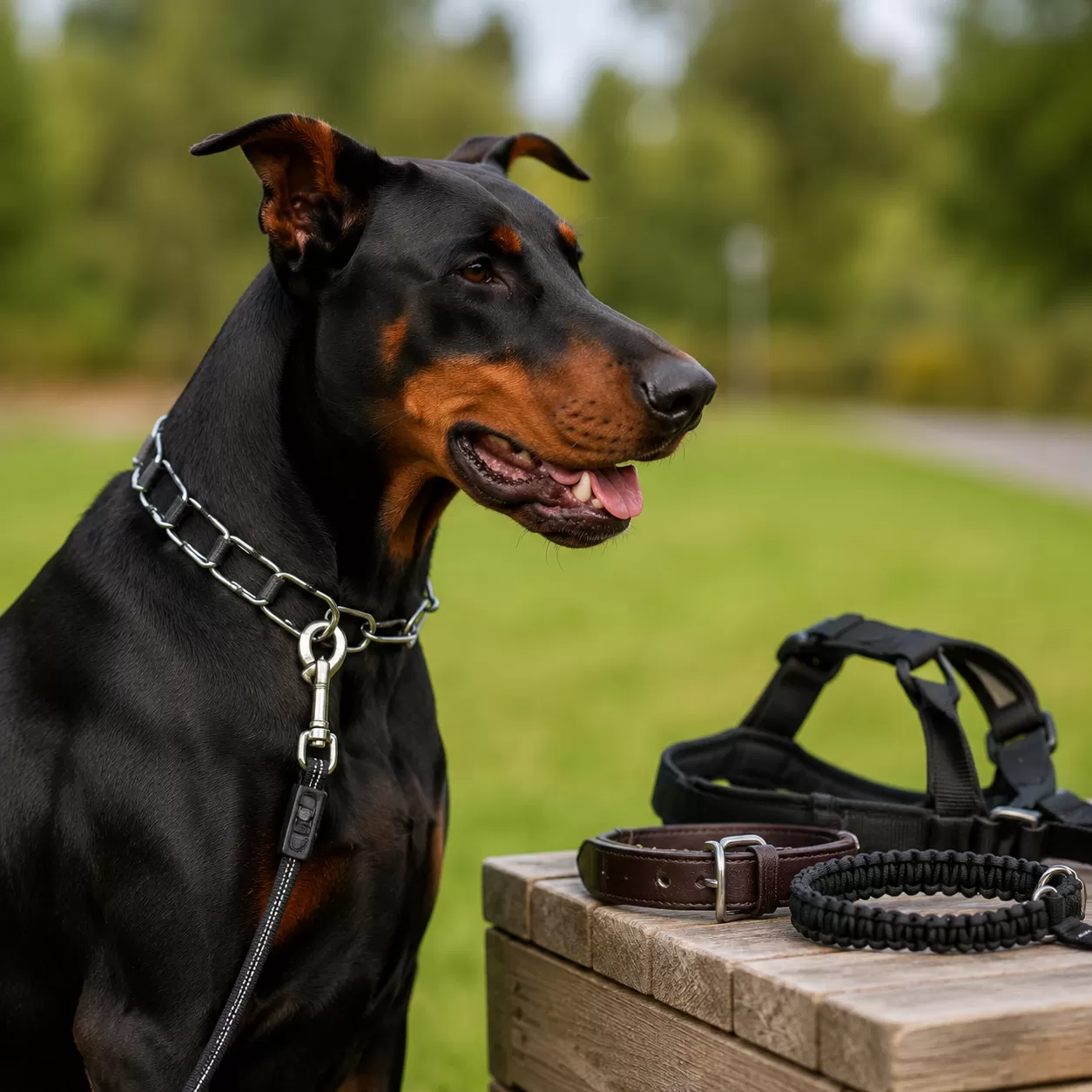
Every dog has a unique temperament, and while I find the prong collar to be the most effective for clear communication, it is important to understand how it stacks up against other dog training tools. Choosing the right gear depends on your dog’s drive, neck anatomy, and the specific behavioral goals you are targeting.
Comparing Common Walking Gear
| Tool Type | Best For | Pros | Cons |
|---|---|---|---|
| Prong Collar | High-drive, large pullers | Precise communication; instant feedback | Requires proper training to use |
| Martingale Collar | Escape artists (Sighthounds) | Prevents slipping out of the collar | Minimal impact on heavy pulling |
| Head Halter | Management-focused owners | Controls the head to stop pulling | Many dogs find it restrictive |
| Front-Clip Harness | Mild pullers | Redirects the dog’s body toward you | Can still allow “power pulling” |
Why Tools Matter for High-Drive Dogs
For dogs with high prey drive or reactive tendencies, a standard flat collar often provides zero leverage and can actually cause neck injury if the dog lunges. In these cases, a dog leash pulling solution like the prong collar offers a level of control that a harness simply cannot match. If you are debating between a head halter or a body-worn option, I’ve compared the gentle lead vs harness and other no-pull tools to help you see which fits your specific lifestyle.
While a flat collar is perfect for holding ID tags, it isn’t a training tool. If your dog is constantly hitting the end of the leash, switching to a more structured option is a safety priority. For those looking into body-worn options for hiking or casual strolls, I recommend browsing my dog harness guide to understand how different clip placements affect your dog’s movement and your ability to manage them.
- Martingale collars are the “middle ground,” offering more security than a flat collar for narrow-headed dogs like Greyhounds.
- Head halters work like a horse’s bridle, but they require a long desensitization period as many dogs dislike the feeling on their snout.
- Front-clip harnesses are excellent for puppies or dogs that don’t respond well to neck pressure, though they offer less precision than a collar.
The “best” tool is the one that allows you and your dog to walk safely and calmly together without the risk of the dog backing out of their gear or causing themselves injury through constant pulling.
Prong Collar FAQs: Essential Tips for Dog Owners
Does a prong collar actually hurt my dog?
When fitted properly, a prong collar does not cause pain. It uses blunted metal links to create even pressure around the neck, mimicking the natural correction a mother dog gives her pups. The goal is to provide a clear “pressure and release” signal, not to punish or harm the animal.
Can I use a training collar on a puppy?
We generally advise against using a training collar on puppies under 6 months old. Their necks are still developing, and they first need to learn basic engagement. Focusing on foundational behaviors and dog chew toy safety and training is a better starting point before introducing corrective tools.
How long can my dog wear it during a walk?
A prong collar should only be worn during active training or walking sessions. It is not a 24/7 collar.
- Limit use: Ideally no more than 1–2 hours at a time.
- Supervision: Never leave the collar on while the dog is unattended.
- Skin checks: Regularly check the neck for any signs of irritation or sensitivity.
Are rubber tips necessary for safety?
While they seem “softer,” rubber tips are often unnecessary and can actually be counterproductive. They create friction that pulls on the dog’s fur and can dull the precision of the Martingale loop mechanism. High-quality, smooth metal links are designed to slide easily for a clean communication signal.
What is the best brand for stainless steel collars?
Herm Sprenger is the undisputed leader for professional-grade tools. Their stainless steel collars are rust-resistant, incredibly durable, and feature the patented center plate that ensures pressure is distributed evenly and safely.
| Feature | Recommendation |
|---|---|
| Material | Stainless Steel (Herm Sprenger) |
| Usage | Training and walks only |
| Safety | Always use a backup safety clip |
| Fit | High and snug behind the ears |