When a pet brand wants to develop something new, one of the first practical questions we ask is: “What is already working in your current range?” The answer may be a best-selling product, a recognizable colour or material, or a design customers already understand and return to.
Starting from that evidence can be lower risk than developing every new item from zero. The next step is to decide how the successful direction can extend into complementary products while balancing brand consistency, commercial potential, development complexity, SKU count, minimum order requirements and inventory risk.

1. Start With a Proven Core Product
Before deciding what to develop next, look at what is already working. The strongest starting point may be your best-selling product, the design with the clearest repeat demand, or the colour and material combination customers already associate with your brand.
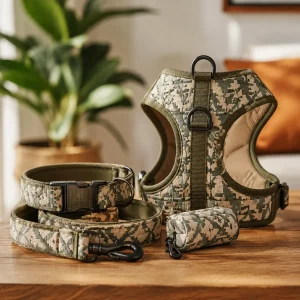
If an existing harness performs well, the next logical additions might be a matching collar, leash and poop bag holder. A brand that already sells collars and leashes may decide to add a coordinated harness. An established walking collection might be refreshed through a seasonal colour or material update rather than a completely new construction.
Commercial evidence should guide the direction, but no extension is automatically successful. Consider why customers buy the original product, how the proposed accessory supports it and whether the new item adds a useful purchase occasion.
Brands considering a harness-led range can review Minardi Pets’ custom dog harness development overview for examples of construction, branding and material decisions that may influence related products.
2. Expand Sideways Before Expanding Everywhere
There are two broad ways to expand a range. Adjacent expansion adds products that naturally sit beside an existing item. A harness may lead to a collar, leash and poop bag holder. These products often share visible collection elements such as colours, webbing, hardware finishes, logo treatment and packaging direction.
New-category expansion moves into a different product family. A walking-accessory brand might add a raincoat, drying coat or dog pajamas. This can open a new use case, but it may also require different patterns, fabrics, sizing logic and production knowledge.
Neither route is always better. Adjacent development can be easier to explain to existing customers, while a new category may support a broader commercial objective. The right choice depends on customer demand, internal capability, available inventory budget and how closely the new product fits the brand.
3. Decide What Should Stay Consistent Across the Collection
A coordinated range needs recognizable design language. Before sampling, decide which elements should connect the products:
- colour palette and fabric direction;
- webbing width, weave or printed pattern;
- hardware colour and finish;
- logo method, scale and placement;
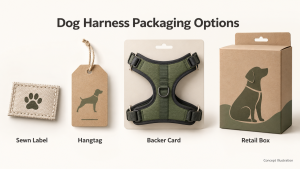
- labels, stitching details and packaging;
- the overall balance between practical and decorative features.
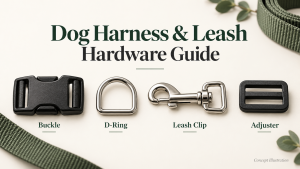
Matching visual design does not mean every product should use identical construction or materials. For example, a fabric used across a harness may become an overlay or design detail on a matching leash, while the leash still requires appropriate structural webbing for its function. In the same way, a buckle suitable for a lightweight collar may not suit a larger harness.
The collection can therefore share colours, finishes and branding while each product uses construction appropriate to its function. This keeps the range coordinated without compromising practical requirements.
4. Control SKU Growth Before Adding Too Many Products
Range expansion can create inventory complexity faster than expected. SKU count is usually affected by the combination of product, colour and size. One harness offered in four colours and four sizes already represents sixteen variations. Adding collars and leashes in every colour and size can multiply the number further.
Before approving a collection, decide which products genuinely require a full size range. Some accessories may work with fewer size options. Separate core colours from seasonal colours, and ask whether every product needs to be available in every colour.
A practical range might give the main product the broadest choice while limiting supporting accessories to the combinations most likely to be purchased together. This is not only an MOQ question. It affects forecasting, storage, photography, product listings, packaging, replenishment and the amount of cash held in slower-moving variations.
5. Consider MOQ at Collection Level, Not Only Product Level
MOQ is shaped by more than the final number of finished products. Construction, material, colour, size breakdown, custom printing, webbing, hardware, logo method and packaging can all affect the minimum requirements for a project.
When coordinated products use shared colours, standard hardware or the same available webbing, sourcing and development may sometimes be simpler. However, this does not mean that combining products will always reduce MOQ or cost. A custom-dyed fabric, specially woven webbing, moulded component or exclusive hardware finish may still carry its own minimum requirement.
Discuss the collection as a complete plan rather than requesting isolated quotations for each item. The development partner can then identify which materials may be shared, which components must be sourced separately and where a design choice creates additional quantity or setup requirements.
6. Develop Coordinated Samples Together
If several products are intended to launch as one collection, reviewing their samples together can reveal inconsistencies that are easy to miss when each item is developed separately. For a harness, collar, leash and poop bag holder range, compare colour, hardware finish, logo scale, webbing or fabric coordination, stitching, product proportions and packaging direction.
Each item still needs its own functional and construction review. Approval of a harness does not automatically approve the stitching, measurements or hardware on a leash or collar. Treat the collection review and the individual product review as two related checks.
The existing dog harness sample development guide explains the type of information brands can prepare before sampling. For a multi-product range, the same discipline should be applied to each item while also checking how the products work together visually.
7. Use Seasonal Collections Without Rebuilding the Entire Range
A seasonal range does not always require a new base construction. Brands can retain a proven product shape and refresh selected materials, colours, artwork or accessories.
For an autumn or winter direction, examples could include tweed, tartan, corduroy or deeper colours. A spring or summer direction might use lighter fabrics, brighter colours, prints or seasonal artwork. A premium year-round capsule might rely on neutral colours, matte hardware and restrained branding.
These are design and development examples, not predictions of what will sell. The practical question is which elements can change without affecting the approved fit, function and production consistency of the core item. A controlled seasonal update may offer freshness while allowing the brand to retain familiar sizing and construction.

8. Know When to Improve an Existing Product Instead of Adding Another SKU
Range expansion does not always mean more products. Sometimes the most valuable next development project is improving an item that already sells.
Customer feedback, returns, reviews and repeat-order discussions may point to a fit adjustment, better size grading, different hardware, stronger reinforcement, improved logo placement, a new lining, clearer packaging or an additional core colour. Resolving one repeated issue can be more useful than adding a new category that creates further inventory.
When evaluating an improvement, define the problem clearly and compare the revised sample with the existing specification. For load-bearing products, checks may include stitching, stress points, webbing, buckles, D-rings and measurements. The dog harness quality-control guide provides a useful reference for the types of details that may need review, although requirements should always be agreed for the specific product.
9. Plan Range Expansion in Stages
First collections and established-range projects are both valid forms of product development, but they usually begin from different information. Planning the next stage early can help prevent initial choices from making later additions unnecessarily difficult.
Developing a first collection
A new brand may need more work on product positioning, construction, material direction, size planning, branding application and initial sampling. These decisions establish standards that later products may need to follow.
Expanding an existing range
An existing brand can begin with products, colours, customer feedback, sales patterns and brand standards already in use. Development may focus on matching those standards, adding complementary products, improving a proven construction, creating seasonal updates and maintaining repeatability for future reorders.
One possible staged framework is:
- Stage 1: harness, collar and leash;
- Stage 2: poop bag holder and a bandana or bow tie;
- Stage 3: a seasonal colour or material extension;
- Stage 4: a new category such as apparel.
This is an example, not a required process. A brand might start with fewer items or move into apparel earlier. In either case, consider future colour standards, logo methods, packaging and component availability before the current stage enters production.
Minardi Pets’ development and production process outlines how discussion, sampling, production planning and ongoing support can be coordinated around an agreed project.
10. What to Prepare Before Discussing a Range Expansion
A focused project brief makes it easier to assess feasibility and provide useful development feedback. Where available, prepare:
- photos or physical samples of existing products;
- an overview of the current range and best-selling products;
- the category you want to add;
- your colour palette and material preferences;
- logo files, labels and current packaging;
- approximate quantities and target timing;
- specific problems you want the new project to improve.
You do not need every answer before the first discussion, but separating confirmed requirements from open questions helps avoid assumptions during sampling and quotation.
Frequently Asked Questions
Can I develop matching accessories from an existing dog harness?
Yes, an existing harness can provide the colour, branding and design direction for collars, leashes, poop bag holders or other suitable accessories. Each new product still needs its own construction, material and functional review.
Do all products in a walking collection need to use the same material?
No. Products should look coordinated, but materials must suit their function. A harness fabric may be used as a visual detail on a leash while the load-bearing part uses suitable webbing or rope.
How do additional colours and sizes affect MOQ?
Each colour and size can change the production breakdown, while custom fabric, printing, webbing, hardware and packaging may have separate minimum requirements. Confirm the full SKU plan before assuming that the total collection quantity can be divided freely.
Should I sample a full collection at the same time?
Sampling related products together can help identify differences in colour, hardware and branding. However, every product must still be reviewed and approved individually. The best sequence depends on how many specifications are already confirmed and how closely the products are connected.
Can an existing pet product be improved instead of completely redesigned?
Yes. Fit, grading, hardware, reinforcement, lining, branding, packaging or colour can often be reviewed without replacing the entire product concept. The development brief should identify what must remain unchanged and what problem the revision needs to solve.
Planning Your Next Product Range?
Minardi Pets is a China-based OEM/ODM pet product development and production partner. We coordinate custom pet product projects through a selected production network.
Whether you are adding matching accessories to an existing bestseller, improving a current product or developing a seasonal collection, we can support product development, sampling, customization, production follow-up, quality checks, packaging and export coordination.
To discuss a project, share your current product range, the product you want to add, your reference or design direction, approximate quantity and target timing.
Email: info@szminardi.com
WhatsApp: +86 189 1278 7586