Part 3:https://www.minardipets.com/news/nylon-vs-leather-vs-biothane.html
Dog Leash Material series -part 4 of 5
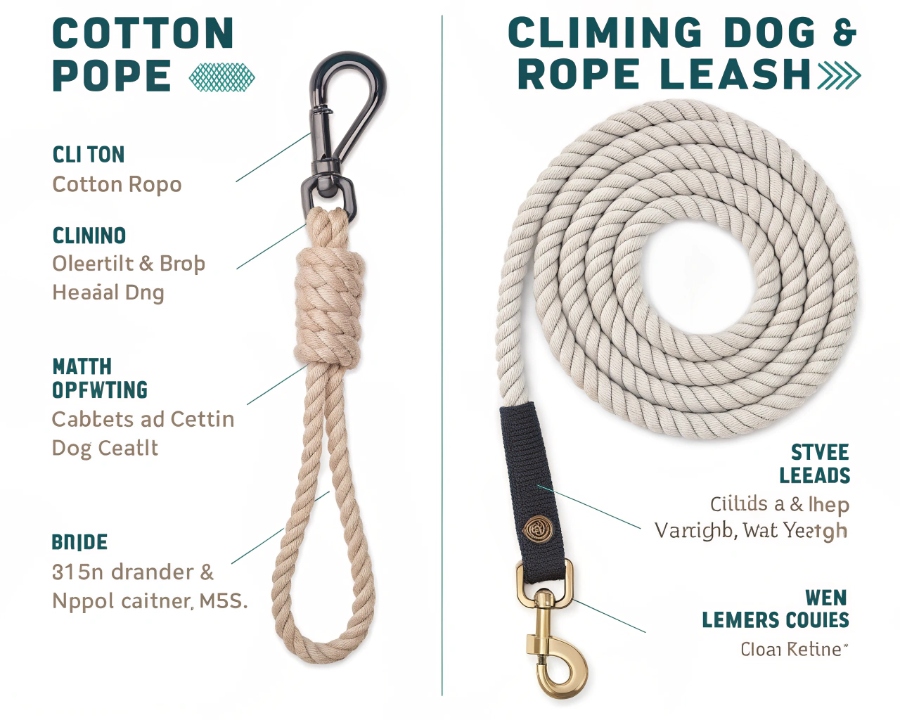
When we talk rope dog leash material, we’re usually talking about two types: soft cotton rope and climbing rope-style leashes.
Cotton rope dog leash
l Softer, more natural feel in hand
l Good for light to medium dogs and casual walks
l Tends to absorb water, odors, and dirt faster
l Can fray faster if your dog pulls hard or chews
Climbing rope dog leash
l Uses mountaineering-style rope (usually nylon or polyester core)
l Strong, flexible, and designed for load and impact
l Great for strong dogs, outdoor use, and long lines
l Better abrasion resistance than cotton
If you’re already looking at heavy duty dog leash options for strong dogs, climbing rope material is usually the better pick over cotton.
Rope dog leashes stand out for comfort and handling:
· Comfortable grip leash: Round rope is easier on the hands than thin webbing, especially over long walks.
· Natural give / slight stretch: Climbing rope has a bit of dynamic stretch, so it can absorb some shock when a dog hits the end of the leash.
· Less leash burn: Rope (especially cotton) is less likely to cause leash burn compared with thin, stiff nylon webbing—important for pullers or reactive dogs.
If you care a lot about grip comfort and shock absorption, a rope dog leash beats most flat nylon options.
Rope leash material can be a great fit in these situations:
· Active walks and hiking – Climbing rope leashes are rugged and pair well with a proper harness and heavy-duty leash setup.
· Strong, sporty breeds – Huskies, working dogs, and larger active breeds do well on a good climbing rope dog leash.
· Training long lines – Rope long lines drag better on the ground and tangle less than thin webbing.
· Owners who hate harsh webbing – If flat nylon cuts into your hands, rope is a big upgrade in comfort.
Rope isn’t always the best dog leash material:
· Not ideal for serious chewers – Strong chewers can destroy rope quickly; a chain dog leash or Biothane may be safer.
· Cotton rope in wet climates – Cotton absorbs water, gets heavy, and can smell; it’s not a good waterproof dog leash option.
· Precision training – For some obedience work, a flat training leash gives clearer feedback than bulky rope.
· Urban dogs that stay very clean – Rope can pick up dust and dirt faster than slick materials like Biothane.
If you want a low-maintenance, easy clean leash that’s also waterproof and odor resistant, you may want to compare rope with more modern options like Biothane or coated webbing alongside your rope choices.
Chain dog leashes are one of the few options that can truly slow down serious chewers. For some dogs, a chain dog leash is the only way to stop them from eating through every lead you buy. Still, I treat chain as a management tool, not an everyday comfort leash.
Pros:
· Very hard to chew through
· Good short term fix for dogs destroying every nylon dog leash
· Works well as a short traffic lead for strong dogs (when paired with a padded handle)
Cons:
· Heavy, especially for small or senior dogs
· Can be harsh on your hands without a padded or leather handle
· No “give” if the dog hits the end of the leash
· Can get very hot or cold depending on the weather
I usually pair chain with a comfy handle or even a leather dog leash handle to cut down on hand fatigue and potential leash burn. For serious chewers, combine a chain leash with safe chew outlets and smart toy choices (this is where a solid guide to choosing dog chew toys is just as important as the leash).
Polyester dog leashes sit between nylon and polypropylene in feel and performance. You’ll see them in flat webbing leashes, reflective dog leashes, and budget-friendly long lines.
Why I use polyester webbing leashes:
· Lighter than many nylon leashes
· Decent strength for most small and medium dogs
· Takes color and reflective stitching well (great for night walks)
· Often cheaper, so good if you need multiple lengths (training leash, long line leash, backup leash)
Where polyester falls short:
· Not as tough as heavy duty nylon or leather for big pullers
· Can fray faster with sharp rocks, rough concrete, or frequent dragging
· Absorbs some water and can hold odor if not dried properly
For urban walks and casual use, a polyester dog leash is totally fine. For strong, athletic dogs or heavy outdoor use, I usually upgrade to Biothane leash material or premium nylon.
You’ll also see a few “special” dog leash material types in the
Here’s a quick side by side look at the main dog leash material types so you can pick what actually works for you and your dog.
Dog leash material | Strength & durability | Waterproof / weather resistance | Grip comfort & handling | Maintenance & cleaning | Average cost range* |
Nylon dog leash | High strength, can fray over time, good for most dogs | Good; dries fast but can soak and hold odor | Can cause leash burn if dog pulls hard; textured nylon has better grip | Easy to wash with soap & water; similar to caring for nylon dog collars | Low–mid |
Leather dog leash | Very durable when cared for; excellent for strong pullers | Moderate; not ideal for soaking wet use, can stiffen/crack if not dried | Best-in-hand feel; soft, grippy, less friction once broken in | Needs regular conditioning; wipe clean, avoid soaking | Mid–high |
Biothane leash | Very strong, stable even in long lines; great for large dogs | Excellent; fully waterproof, UV and weather resistant | Smooth but grippy; no leash burn when edges are rounded | Just rinse or wipe; mud, sand, and odor don’t stick | Mid |
Rope dog leash (climbing rope) | High; great for active and strong dogs | Good; handles rain well but can hold water/odor | Round profile is comfy; slight stretch absorbs shock | Hand wash, air dry; check for core damage | Mid |
Rope dog leash (cotton) | Moderate; not ideal for heavy pullers or chewers | Poor–moderate; absorbs water, slow to dry | Soft and comfy; gentle on hands | Can shrink or stay damp; needs more frequent washing | Low–mid |
Chain dog leash | Very high; nearly chew proof | Excellent; no water issues, won’t rot | Heavy, cold, and can jerk hard; noisy and uncomfortable to hold | Simple wipe-down; check for rust or sharp links | Low–mid |
Polyester / mixed fabric leash | Moderate–high depending on webbing quality | Good; dries faster than cotton, similar to nylon | Varies: from soft to slightly slick; some padded handles | Easy wash, quick dry; low maintenance | Low–mid |
Eco friendly / vegan dog leash (hemp, recycled webbing, vegan leather) | Moderate; good for everyday use, not always ideal for heavy chewers | Varies; hemp absorbs water, vegan leather usually more resistant | Generally soft and comfy; less harsh on skin | Gentle wash; some plant fibers need longer drying time | Mid |
*Cost ranges vary a lot by brand, hardware, and length, but the table shows typical positioning in the market.
If you want something heavy duty, low maintenance, and weather proof, I usually steer global customers toward Biothane leashes or high quality nylon dog leashes, then match handle comfort and length to how and where you walk your dog.
Picking the best dog leash material is simple if you match it to your dog’s size, strength, and lifestyle.
Dog type | Recommended dog leash material | Why it works |
Toy & small breeds | Nylon, polyester, soft rope | Light, flexible, comfy in hand |
Medium, average pullers | Nylon, Biothane, leather | Good balance of strength and comfort |
Large & powerful breeds | Leather, Biothane, climbing rope | Strong, controlled grip, less chance of snapping |
Giant or working breeds | Heavy duty leather, Biothane, rope web | High strength, better for serious pulling |
I always size up in width and hardware for big or muscular breeds.
For strong pullers, durability and grip matter more than looks:
Best options:
l Leather dog leash – excellent grip, ages well, great for daily use with strong dogs.
l Biothane leash – very strong, waterproof, low maintenance.
l Climbing rope dog leash – solid strength, some shock absorption.
Avoid: thin nylon or cheap polyester that can cut into your hands and fray fast.
Pair a strong leash with a good no-pull harness (see my guide to the best no-pull dog harnesses) if your dog really leans into the leash.
If your dog is part alligator, choose materials that slow them down:
Best for chewers:
l Chain dog leash (short-term management, not for daily long walks).
l Thick Biothane or heavy nylon backed with training.
Avoid: thin rope and cotton for power chewers – they shred too fast.
Material won’t replace training, but it buys you safety time.
Different environments = different dog leash material types:
Scenario | Best dog leash material types | Why |
City / urban | Nylon, leather, Biothane (standard length) | Easy handling, traffic control, stylish options |
Hiking / trails | Biothane, climbing rope, reflective nylon long line | Strong, visible, easy clean, snag-resistant |
Beach / rain | Waterproof Biothane leash | Doesn’t soak, stink, or rot |
Travel | Compact nylon or Biothane | Packs small, quick to clean |
For rough outdoor use, I lean heavily toward Biothane because it’s a truly waterproof dog leash and wipes clean in seconds.
You don’t need the most expensive leash; you need the right one:
· Budget-friendly: standard nylon dog leash or polyester dog leash – good value, tons of colors.
· Mid-range: Biothane leash – higher upfront cost, but long-lasting and easy clean.
· Premium: leather dog leash – best feel in hand, suits strong dogs, looks better over time.
· Style-focused:
· Colorful nylon and Biothane for modern looks.
· Classic leather if you like a more traditional vibe.
If you already use quality nylon gear, match your leash to a sturdy collar like the ones in my top nylon dog collars size chart guide: top nylon dog collars 2026. It keeps your setup consistent in strength and style.
PREVIOUS:Best Dog Leash Material Guide for Safety and Durability(Part5) NEXT:Best Dog Leash Material Guide for Safety and Durability(Part3)

 Amy
Amy Amy Wang