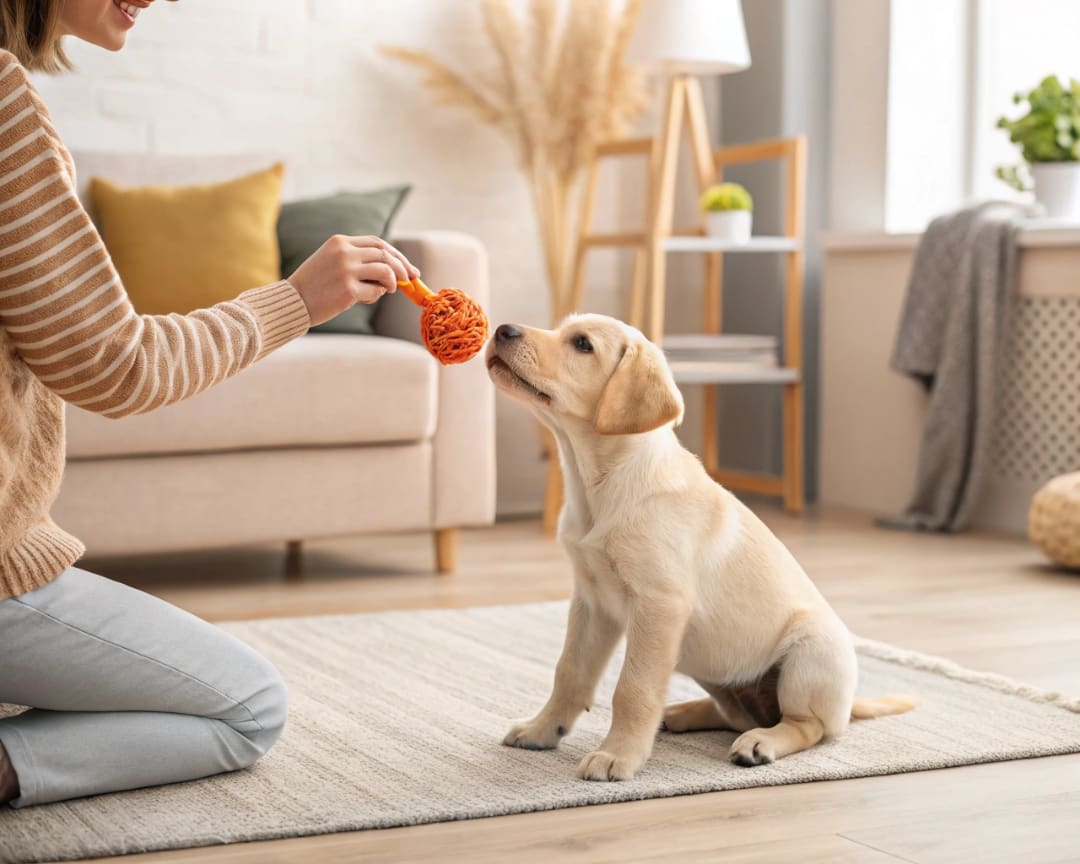
 Introducing New Chew Toys the Right Way
lBring in new chew toys for teething puppies like they’re a reward, not clutter.
lOffer one toy at a time and play a short game (tug, gentle fetch, or hand-held chewing).
lAdd value: smear a little puppy-safe paste, soft food, or yogurt on it.
lWhen your puppy chews the toy instead of your hands or furniture, mark it (“yes!”) and treat.
This is how you quietly build puppy chewing prevention into daily life.
Most puppies get bored staring at a basket of the same toys. I like to:
lKeep 2–3 puppy teething toys out, and store the rest.
lSwap toys every 2–3 days so each one feels “new.”
lRotate textures: rubber teething toys for dogs, rope toys for puppies, and one interactive puppy chew toy or stuffable toy.
For real puppy gum relief, frozen options work fast:
lUse freezable puppy toys or rubber KONG puppy toys; stuff with soaked kibble, puppy pâté, banana, or plain yogurt and freeze.
lChill cooling teething toys for puppies in the fridge for milder relief.
lAvoid rock-hard blocks of ice directly on tiny teeth; always use a soft rubber puppy toy or teething ring for dogs as the holder.
Chew toys aren’t just entertainment; they’re tools:
lWhen your puppy starts biting hands, calmly say “no” or “uh-uh,” then offer a safe chew toy for puppies and praise when they switch.
lUse stuffed toys during crate time or after walks so your puppy learns to settle.
lPair “sit,” “down,” and “place” with access to interactive and stuffable puppy toys as a reward.
This keeps training and chewing linked in your puppy’s brain.
If you’re also working on calm walking and impulse control, combining chew sessions with harness and lead practice pairs nicely with a correctly fitted setup like the ones shown in this guide to fitting a dog harness correctly.
You can’t trust every toy in every situation. My rules:
lAlways supervise: rope toys, plush toys, and any edible puppy chews or natural chews for puppies.
lCrate-safe only: durable puppy chew toys like soft rubber teething toys, KONG puppy toys, or vet recommended puppy chew toys that are too big to swallow and show no cracks.
lRemove immediately if you see chunks missing, deep splits, or frayed ropes—throw it out, don’t risk it.
Even if you buy “the best” chew toys for teething puppies, a few simple mistakes can still lead to broken teeth, choking risks, or a puppy that keeps chewing your furniture instead.
Adult chews (full-strength Nylabones, hard rubber, real bones, antlers) are usually too hard for baby teeth. They can:
lCrack or chip fragile puppy teeth
lMake gum pain worse instead of soothing it
lStick with puppy-specific teething toys and “gentle” formulas until adult teeth are fully in.
A safe chew toy for puppies should:
lBe larger than your puppy’s mouth (so it can’t be swallowed whole)
lHave a little “give” when you press your thumbnail into it
If it doesn’t flex at all, or if your puppy can get the whole thing into their mouth easily, it’s not a safe chew toy.
One chew won’t solve teething. When puppies get bored, they go back to chair legs and shoes.
Rotate a few different rubber teething toys, rope toys for puppies, and soft plush options so there’s always something “new” and interesting to chew.
Chew toys don’t last forever. Replace them when you see:
lDeep cracks, chunks missing, or sharp edges
lRope toys that are heavily frayed or shedding long strings
lPlush toys with stuffing coming out
Damaged toys turn from safe chew toys for puppies into choking and blockage risks.
Teething toys help with puppy chewing prevention, but they don’t replace:
lDaily walks and play
lBasic obedience training
lStructure and calm time
A tired, trained puppy chews less. Use interactive puppy chew toys and stuffable toys as support, not as your only strategy.
Keeping chew toys for teething puppies clean isn’t optional – it’s how you protect your puppy’s gut, skin, and teeth while they’re chewing all day.
For rubber teething toys for dogs and silicone puppy teething toys:
Daily rinse: Quick hot-water rinse after heavy use or stuffing with food.
Deep clean 2–3x per week:
Use warm water + mild, fragrance-free dish soap.
Scrub inside textures and grooves.
Rinse until there’s zero soap feel or smell.
Dishwasher-safe toys: Top rack, no harsh detergents or super hot “sanitize” modes that can warp softer toys.
If you use stuffable puppy toys (like KONG puppy toys), clean them after every food use so old food doesn’t mold inside.
Rope toys for puppies and soft toys for teething puppies collect drool and bacteria fast:
Cotton rope toys
lIf washable, soak in hot water + mild detergent.
lRinse very well, then air-dry completely before giving back.
lAvoid bleach on anything your puppy will chew.
Plush puppy toys
lPut in a laundry bag, wash on gentle with mild detergent.
lAir-dry or low heat only; high heat can melt plastic parts and seams.
If you’re using nylon dog collars or harnesses during chewing and play, clean them regularly as well to avoid bacteria and odor buildup – the same basic approach used when you clean and maintain nylon dog gear applies to fabric toys.
For edible puppy chews and natural chews for puppies:
Short sessions only: Don’t leave edible chews lying around all day.
Half-used chews:
lLet them dry, then store in an airtight container in a cool, dry place.
lFor soft, meat-based chews, refrigerate and use within a few days.
lNo “mystery chews”: If you’re not sure how long it’s been out or it smells off, toss it.
Replace them when you see:
lPieces breaking or peeling off (choking/blockage risk)
lLong strings on rope toys or badly frayed knots
lDeep cracks, splits, or missing chunks in rubber or nylon
lStuffing or squeakers poking out of plush toys
lStrong, sour, or moldy smell even after washing
Rule I use: If you’re hesitating, it’s probably time to bin it. A new toy is always cheaper than an emergency vet bill.
Sometimes even the best chew toys for teething puppies aren’t enough on their own. Here’s when you need to step in fast.
lGet your puppy checked by a vet if you notice:
lBleeding that doesn’t stop, or blood on toys every day
lReally bad breath, pus, or swelling around the gums
lLoose baby teeth that won’t fall out or adult teeth coming in at weird angles
lSkipping meals, crying when eating, or pawing at the mouth
lFever, heavy drooling, or lethargy
These can mean infection, retained baby teeth, or other dental issues that chew toys can’t fix.
If your puppy won’t touch their puppy teething toys:
Check the fit: the toy might be too big, too hard, or too smooth
lChange textures and flavors: try soft rubber puppy toys, rope, or edible puppy chews
lMake it a game: toss, tug gently, or stuff food in interactive puppy chew toys
lUse scent and taste: smear with a tiny bit of wet food, pumpkin, or puppy-safe paste
lCut back on free feeding: short, timed meals make food-stuffable toys more attractive
If they still refuse to chew and also act painful or stop eating, call your vet.
For intense puppy biting:
lRedirect fast: calmly say “no” or “uh-uh,” then offer a safe chew toy for puppies
lStop the fun: if they bite skin or clothes, stand up, turn away, and pause play for 20–30 seconds
lAvoid rough play with hands: use toys, not fingers, for tug and chase
lUse long toys: rope toys and longer rubber teething toys for dogs keep teeth away from your hands
lGive more outlets: more exercise + training + durable puppy chew toys = less crazy biting
If biting is constant, hard, or aimed at faces, get help from a positive-only trainer or behaviorist.
Some puppies chew nonstop because they’re stressed, not just teething:
lCreate a calm zone: a crate or pen with a bed and 2–3 safe chew toys
lUse soothing chews: soft rubber and freezable puppy teething toys are great for self-soothing
lStick to a routine: predictable walks, meals, and training lower anxiety
lLimit overstimulation: noisy homes and nonstop handling can ramp up chewing
lOffer mental work: food puzzles and interactive, stuffable puppy toys help them relax through focused chewing
If your pup chews themselves (paws, tail, fur) or panics when alone, talk to your vet about anxiety.
For durable, non-toxic, and freezable chew toys for teething puppies, I’ve built out a line of soft rubber puppy toys that are sized for small mouths and can be frozen for extra gum relief, like these cooling puppy teething toys with textured rubber and our interactive, stuffable puppy chew toy models designed to keep anxious chewers busy in a safe way.
You can start puppy teething toys as early as 8 weeks.
At this age, choose extra-soft rubber and plush-style toys that are gentle on baby teeth and gums. Avoid hard nylon or adult dog chews until your vet says your pup’s mouth is ready.
Frozen puppy teething toys are usually safe if you follow a few rules:
lOnly freeze soft rubber or fabric-style toys designed for puppies
lDon’t give rock-hard ice blocks or frozen real bones
lLet the toy sit for 2–3 minutes after taking it out of the freezer so it’s cold, not rock solid
lAlways supervise, especially with toy breeds and very young pups
If you want a flexible, chill-friendly design, look at freezable rubber puppy toys like these cooling chew toys for teething puppies.
Most teething pups do best with 4–8 chew toys in rotation:
l1–2 soft rubber teething toys
l1 freezable/cooling toy
l1 interactive or stuffable toy
l1 rope or plush chew (supervised use)
Rotate daily so each toy feels “new” and keeps your puppy off your furniture.
For aggressive chewer puppies like Labs, bullies, and shepherds:
lPick durable puppy chew toys marked for “strong chewers”
lUse thicker rubber teething toys for dogs, not thin or hollow plastic
lSkip antlers, hard bones, and adult “power chews” until adult teeth are fully in
lWatch for fast wear and replace at the first deep cracks or missing chunks
A good combo is a tough rubber KONG-style puppy toy, a strong rope (supervised), and a vet recommended puppy chew sized correctly for your dog.
It depends on your puppy’s size and chewing style, but as a rule:
lLight chewers: 1–3 months per toy
lModerate chewers: a few weeks
lPower chewers: sometimes only days to weeks
Replace a toy immediately if you see:
Pieces breaking off
Deep cracks or sharp edges
Rope strings coming loose or stuffing spilling out
If you need something that survives more chewing, consider thicker soft-rubber designs like our durable puppy chew toys in the rubber chew collection, which are built for longer, safer use during the full puppy teething timeline.
By now, you know how to introduce, use, rotate, clean, supervise, and replace teething toys—and even when they are not enough on their own.
One simple but powerful idea:
�� Teething toys aren’t just something you “hand over”—they require smart use + proper cleaning + behavior guidance during the teething stage.
With the right approach, you won’t just reduce destructive chewing—you’ll help One simple but powerful idea:
�� Teething toys aren’t just something you “hand over”—they require smart use + proper cleaning + behavior guidance during the teething stage.
With the right approach, you won’t just reduce destructive chewing—you’ll help your puppy build a lifetime habit of healthy chewing and self-soothing.
If you’re looking for safe, strong, soft-rubber, freezable, textured, or interactive chew toys designed specifically for puppies, message MinardiPets and we’ll share customizable, brand-ready options for your store.
Contact: info@szminardi.com

 Amy
Amy Amy Wang