Dog slip leads safty series -part 1of 3
you’ve ever searched “dog slip lead safety” after a tense walk, you’re not alone.
Slip leads promise quick control for pulling dogs—no collar, just a simple loop and go. Some trainers swear by them. Others call them risky, even harmful.
So what’s the truth?
Can a slip lead be used safely… or is it quietly putting pressure on your dog’s neck, trachea, and throat every time they lunge?
In this guide, you’ll learn:
· How a slip leash actually works (and why that matters for safety)
· The real risks: from choking and tracheal damage to stress and fear
· When a slip lead might be reasonable—and when it’s absolutely not
· The safest alternatives (like no pull harnesses and martingales) that protect your dog’s neck without sacrificing control
If you care about humane, low risk leash options and want your walks to feel better for both you and your dog, you’re going to want to read this all the way through.
A slip lead is a leash and collar in one piece. Instead of clipping to a collar, the leash forms a loop that slips over your dog’s head. It’s popular because it’s fast, simple, and doesn’t require any extra gear.
· One continuous rope/strap
· A sliding ring to create the loop
· Often a rubber or leather stopper to stop the loop from opening too wide
People like slip leads because they’re easy to grab, easy to use, and they work on almost any dog in seconds.
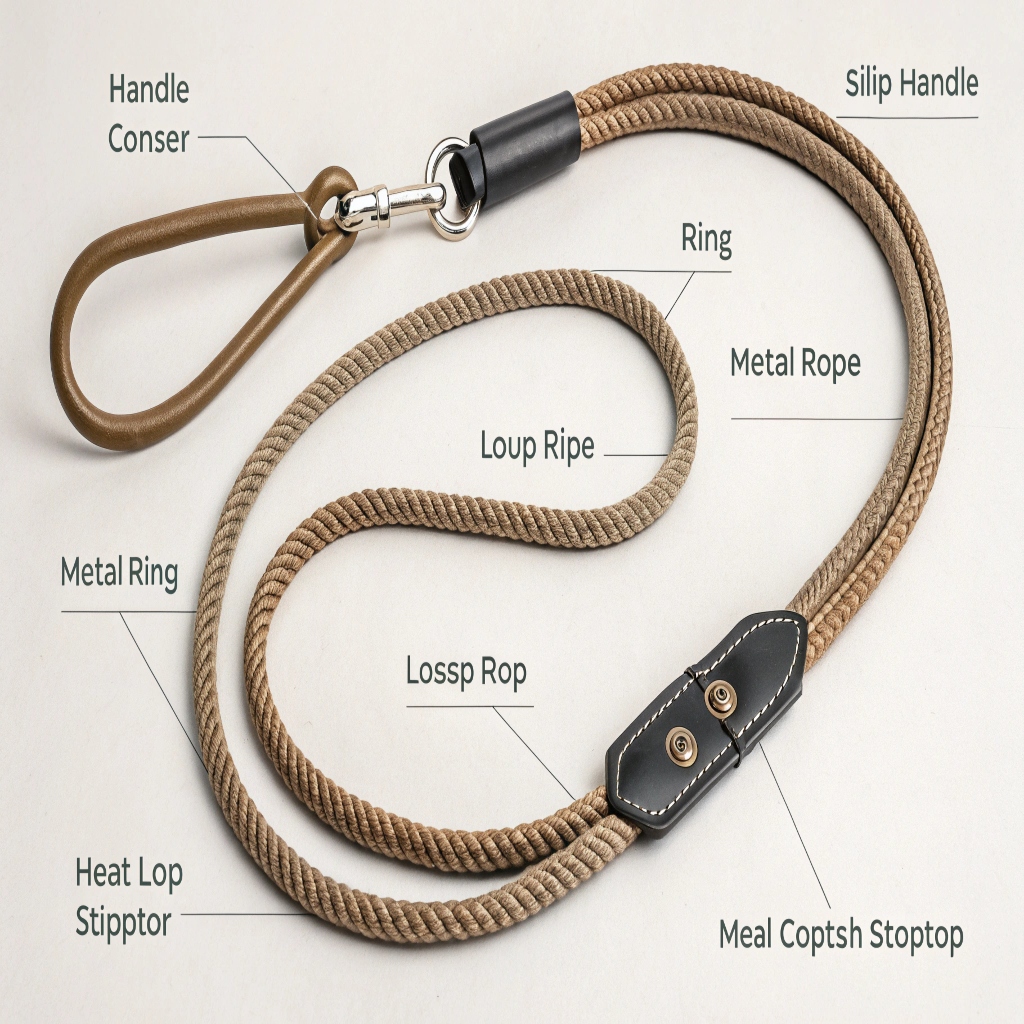
A slip lead is designed to tighten and loosen around your dog’s neck depending on leash tension:
lYou slide the loop over your dog’s head
lWhen the dog pulls, the loop tightens around the neck
lWhen the leash relaxes, the loop should loosen and release
This “slip” action is why dog slip lead safety matters so much. If the loop tightens and doesn’t easily release, your dog can end up with constant neck pressure, which can lead to slip leash injuries like tracheal irritation, pain, or long-term damage.
Key safety detail:
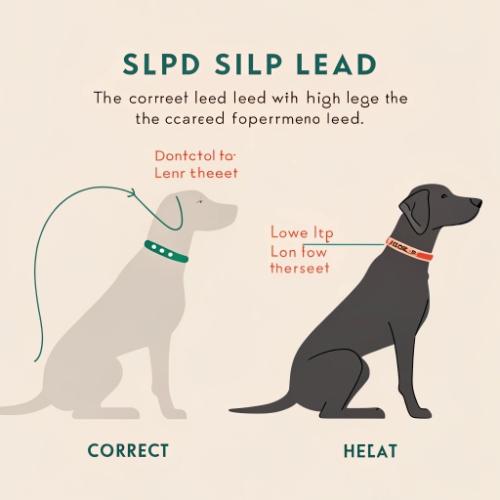
lA proper slip lead fitting means the loop rests high on the neck, behind the ears, and can quickly loosen when there’s no tension.
You’ll see slip leads used a lot in professional settings because of their speed and control:
Veterinary clinics
lTo move dogs safely in and out of exam rooms
lFor dogs without a collar or in emergencies
Animal shelters and rescues
lFor quick handling of many dogs
lTo leash nervous or unknown dogs without getting too close at first
Dog trainers and handlers
lAs a dog training lead for short sessions
lFor fast on/off control at events, grooming, or sport training
In all these cases, slip leads are usually meant for short-term handling, not as an all-day no-pull dog leash. That’s why understanding dog slip lead safety and slip lead risks is crucial before using one on everyday walks.
Dog slip lead safety comes down to one thing: controlling pressure on your dog’s neck. A slip lead tightens when there’s tension and loosens when the leash relaxes. Used well, it’s a quick, simple tool. Used badly, it can cause neck strain, tracheal damage, and long-term stress. I always treat slip leads as short-term management tools, not as an everyday walking setup.
A slip lead is safer when:
· It has a stopper so the loop can’t keep tightening.
· It’s used high on the neck (just behind the ears), not low near the shoulders.
· The handler keeps the leash loose 90% of the time.
· It’s used for short periods, not long walks or heavy exercise.
It becomes risky when:
· The dog pulls constantly and the loop stays tight.
· There’s no stopper to prevent choking.
· It’s used as a “correction” tool with jerks or leash pops.
· It replaces a proper, fitted collar or harness full-time. For proper fit guidance, I’d follow the same principles used for a well-sized dog collar fit and measuring guide.
Some dogs are much easier to injure with dog neck pressure from a leash:
· Puppies – soft bones, growing cartilage, easy to damage.
· Small breeds (Yorkies, Pomeranians, toy poodles) – tiny tracheas, fragile necks.
· Brachycephalic breeds (Frenchies, Pugs, Bulldogs) – already have airway issues.
· Dogs with tracheal collapse, coughing, or thyroid problems – any pressure can make things worse.
· Strong pullers – they “self-choke” and keep tightening the slip lead.
For these dogs, I strongly prefer no-pull harness options or martingale collars over a slip lead.
I would never use a slip lead in these situations:
· On puppies, small toy breeds, or brachycephalic dogs.
· On dogs with neck, spine, eye, or trachea issues.
· For running, hiking, or long walks where pulling is likely.
· As a tie-out or to leave on an unsupervised dog (serious strangulation risk).
· On reactive or aggressive dogs where sudden lunging is common.
If any of these apply, go straight to a front-clip harness, well-fitted collar, or other humane dog leash options instead.
Used correctly and short-term, a dog slip lead can be safe and genuinely useful. I don’t treat it as an everyday walking tool, but as a quick, controlled handling tool in specific situations.
A slip lead is basically collar + leash in one piece. That makes it ideal when you need speed and simplicity.
Where this really helps:
· Vet visits & groomers – fast on/off in busy, stressful spaces
· Shelters, rescues, boarding – dogs coming in and out all day
· Multi-dog households – quick grab-and-go for short potty trips
If you use a no-pull harness for real walks, you can still keep a simple slip lead by the door as a backup handling tool, and rely on a harness like the ones in this no-pull harness guide for your dog’s main exercise.
When there’s good leash handling and the loop is fitted high on the neck with a stopper:
· You can guide the dog for a few minutes between locations
· You can prevent bolting in a car park or lobby
· You can manage excited dogs going in/out of buildings
The key is no constant pulling. The lead should be loose 95% of the time.
Used with care, a slip lead can actually reduce chaos, not create it:
· Newly adopted dogs – quick safety backup until proper gear is fitted
· Dogs that slip out of flat collars – temporary option while you move to a better tool like a martingale or harness
· Emergency situations – when you need to safely catch or move an unfamiliar dog fast
Bottom line: Slip leads can be practical, safe, and humane when:
· They’re used short-term
· The dog is supervised
· The handler keeps the leash loose and light
· For daily walks and strong pullers, I still push people toward harness-based, no-pull setups for better long-term dog slip lead safety.
When we talk about dog slip lead safety, we have to be honest: the design that makes slip leads quick and convenient is also what makes them risky if you’re not careful.
A slip lead tightens directly on the dog’s neck. If a dog pulls or hits the end of the leash:
· The trachea (windpipe) and esophagus take the brunt of the force.
· Repeated pressure can lead to chronic coughing, gagging, or throat sensitivity.
· Dogs that pull hard can experience restricted breathing and increased dog neck pressure from leash use, even over short walks.
This is why I never recommend relying on a slip lead for everyday walks, especially for pullers.
Poor slip lead use or sudden jerks can lead to more serious slip leash injuries:
· Throat/trachea: bruising, inflammation, or even tracheal collapse in vulnerable dogs.
· Spine/neck: strain to cervical vertebrae and muscles, especially if the dog hits the end of the leash at speed.
· Eyes: increased pressure in the head can worsen eye issues, especially in breeds already prone to eye problems.
· Thyroid area: repeated pressure on the front of the neck may irritate tissues around the thyroid gland.
If you want a quick on/off tool with less risk, a gentler lead design like a padded, adjustable option (similar to what’s described in this guide to a gentle lead for dogs) is usually safer than a bare rope slip.
The physical risks are only half the story. Constant neck pressure can also cause behavioral fallout:
· Dogs can start to associate the leash or walks with discomfort, leading to stress and avoidance.
· Sudden tightening when they see other dogs or people can create or worsen leash reactivity (“I see a dog → it hurts → I bark/lunge”).
· Some dogs shut down, walk stiff, or show fear-based behavior because they’re trying to avoid the pressure.
This is the opposite of what we want from humane dog leash options.
Some dogs are simply not good candidates for slip leads due to higher slip lead risks:
· Puppies – soft bones, developing joints, zero leash skills. They tend to pull and dart, making throat and spine injuries more likely.
· Small or toy breeds – tiny necks and very delicate tracheas; even light pressure can cause problems.
· Brachycephalic breeds (pugs, bulldogs, Frenchies, boxers, etc.) – already have breathing challenges; extra neck pressure is a big red flag.
· Strong pullers or high-drive dogs – the harder they pull, the more risk of neck and spine damage.
· Dogs with existing issues – history of tracheal damage, neck pain, eye disease, or thyroid problems should not be on a slip lead.
For these dogs, I strongly prefer no-pull dog leash setups like front-clip harnesses or other choke chain alternatives, which give you control without focusing all the force on the neck.
Please read part 2 :https://www.minardipets.com/news/dog-slip-lead-safety-2.html

 Amy
Amy Amy Wang